
Small sentences for kindergarten children an easy way to start speaking, reading, and writing English. Young learners can begin with familiar words about greetings, family, school, food, toys, feelings, and everyday activities. Short examples such as “I am happy,” “This is my book,” and “I like apples” are easy to understand and practice. With regular repetition, children can become more comfortable making their own English sentences and using them during daily conversations.
What Are Small Sentences for Kindergarten?
Small sentences for kindergarten are short English sentences made with simple words that young children can understand, read, repeat, and use in everyday situations.
At this age, children do not need complicated grammar or long sentences. They can begin with basic sentence patterns such as:
- I am happy.
- I like milk.
- This is my bag.
- I have a toy.
- She is my sister.
- The dog is big.
These sentences introduce children to common words while showing them how words work together to express a complete idea.
What Makes a Sentence Easy for Kindergarten Children?
An easy sentence for a kindergarten child usually has familiar vocabulary, a simple structure, and a clear meaning. Children can understand it quickly and repeat it without struggling with difficult words.
For example, “I like apples” is easier for a young learner than a long sentence containing several unfamiliar words.
Good sentences for kindergarten children usually:
- Use common everyday words.
- Have a simple sentence structure.
- Express one clear idea.
- Are short enough to remember.
- Relate to things children know.
- Are easy to pronounce.
- Can be connected to pictures or actions.
- Can be repeated during daily activities.
Parents and teachers can introduce new sentences gradually. Once children understand one pattern, they can use the same pattern with new words.
For example:
- “I like apples.”
- “I like bananas.”
- “I like milk.”
This helps children learn vocabulary while naturally practicing sentence structure.
Why Should Young Children Learn Short Sentences?
Short sentences help children develop basic English communication skills without making learning feel difficult. They can practice listening, speaking, reading, and writing using language that matches their level.
Regular sentence practice can help children:
- Build a useful vocabulary.
- Speak with greater confidence.
- Recognize common English words.
- Improve pronunciation.
- Practice basic sentence patterns.
- Express simple thoughts and feelings.
- Answer easy questions.
- Communicate with teachers and classmates.
- Develop early reading skills.
- Prepare for longer sentences later.
The goal is not to make children memorize a huge list. A better approach is to practice a few sentences regularly and use them in real situations.
Greetings Sentences for Kids to Learn Always
Greetings are some of the first English expressions children learn. These simple sentences help kindergarten students greet teachers, classmates, family members, and other people politely.
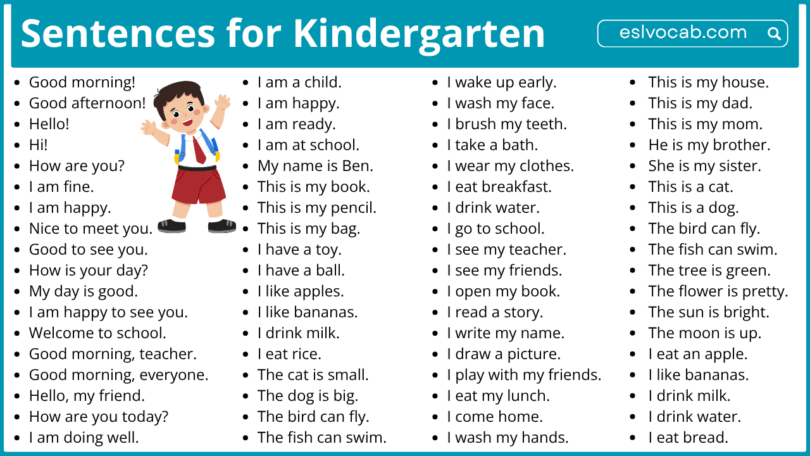
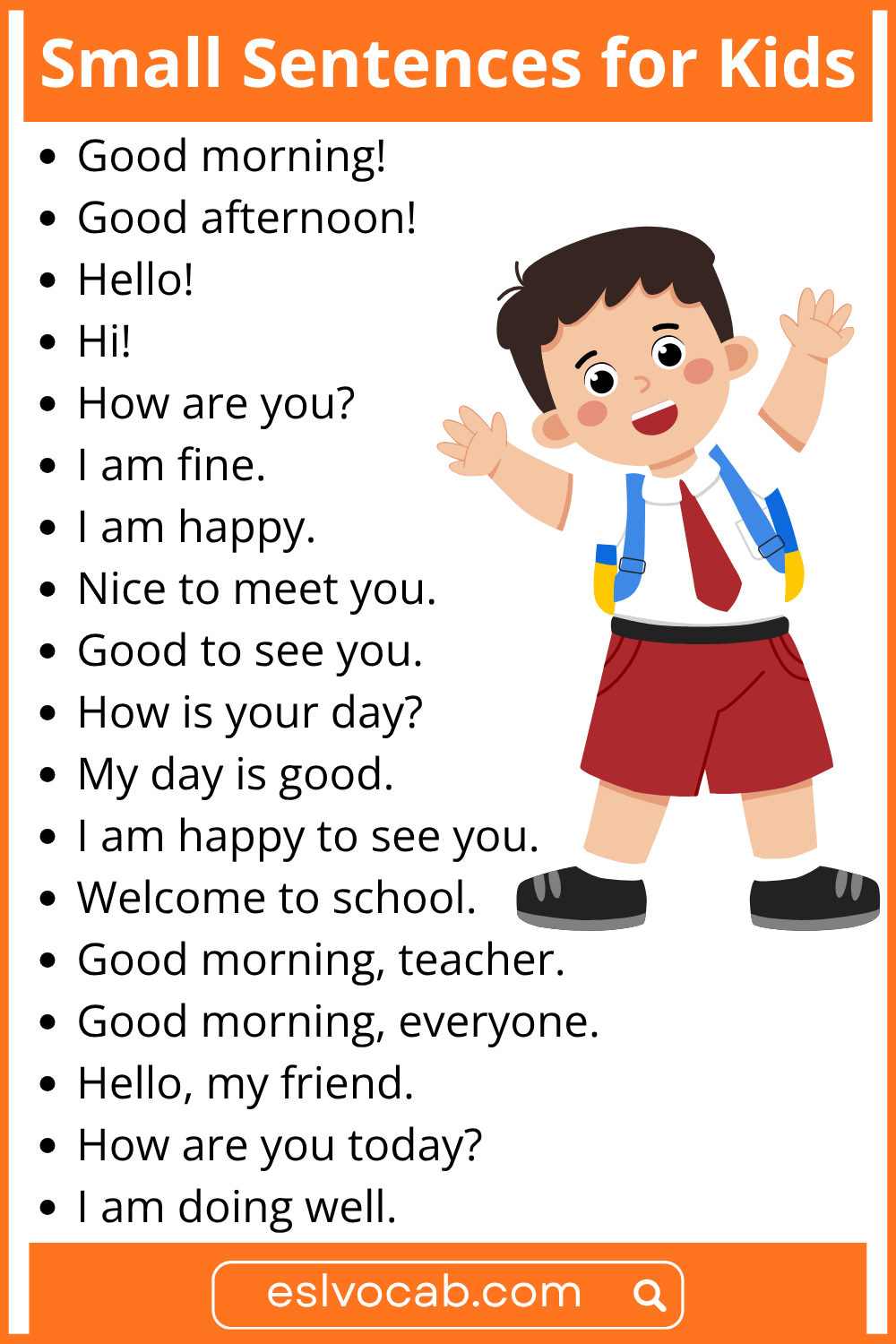
- Good morning!
- Good afternoon!
- Hello!
- Hi!
- How are you?
- I am fine.
- I am happy.
- Nice to meet you.
- Good to see you.
- How is your day?
- My day is good.
- I am happy to see you.
- Welcome to school.
- Good morning, teacher.
- Good morning, everyone.
- Hello, my friend.
- How are you today?
- I am doing well.
- Have a nice day.
- Have a good day.
- See you later.
- See you tomorrow.
- Goodbye, teacher.
- Goodbye, everyone.
- Take care.
Parents can practice these sentences during morning routines, while teachers can use them when children arrive at school. Repetition helps children remember greetings naturally.
Simple Sentences for Kindergarten in English
Simple English sentences give kindergarten children useful language for talking about people, objects, animals, colors, food, and familiar activities.
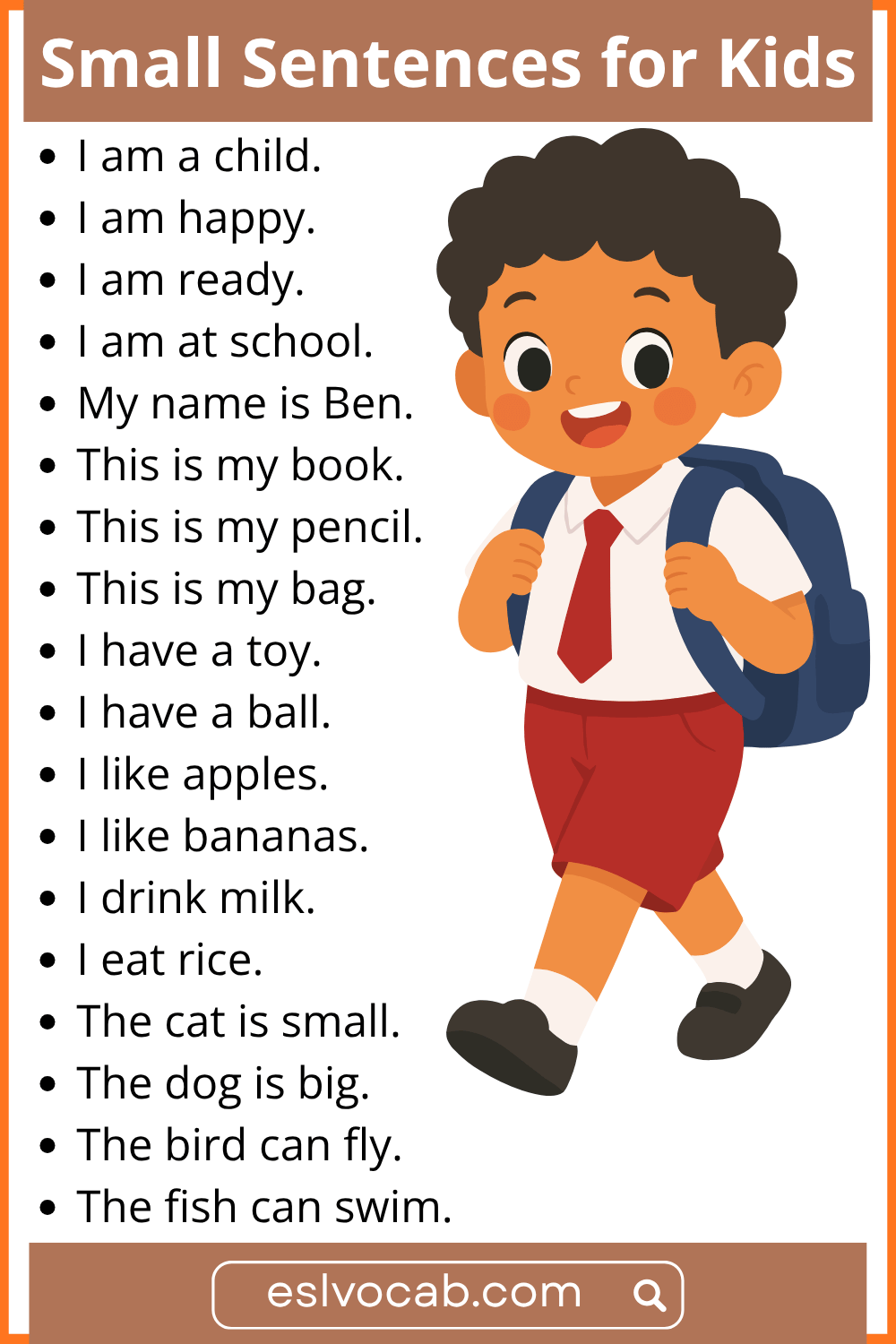
- I am a child.
- I am happy.
- I am ready.
- I am at school.
- My name is Ben.
- This is my book.
- This is my pencil.
- This is my bag.
- I have a toy.
- I have a ball.
- I like apples.
- I like bananas.
- I drink milk.
- I eat rice.
- The cat is small.
- The dog is big.
- The bird can fly.
- The fish can swim.
- The sun is hot.
- The sky is blue.
- The tree is tall.
- The flower is pretty.
- My shoes are black.
- My shirt is blue.
- I can run.
- I can jump.
- I can read.
- I can write.
- I can draw.
- I can sing.
These sentences can also be used as early reading practice. Ask children to read each sentence aloud, point to important words, and connect the sentence with a real object or picture.
Easy Sentences for Kids to Practice Daily
Daily practice gives children repeated exposure to common English words. These short sentences can be used at home, at school, or during playtime.
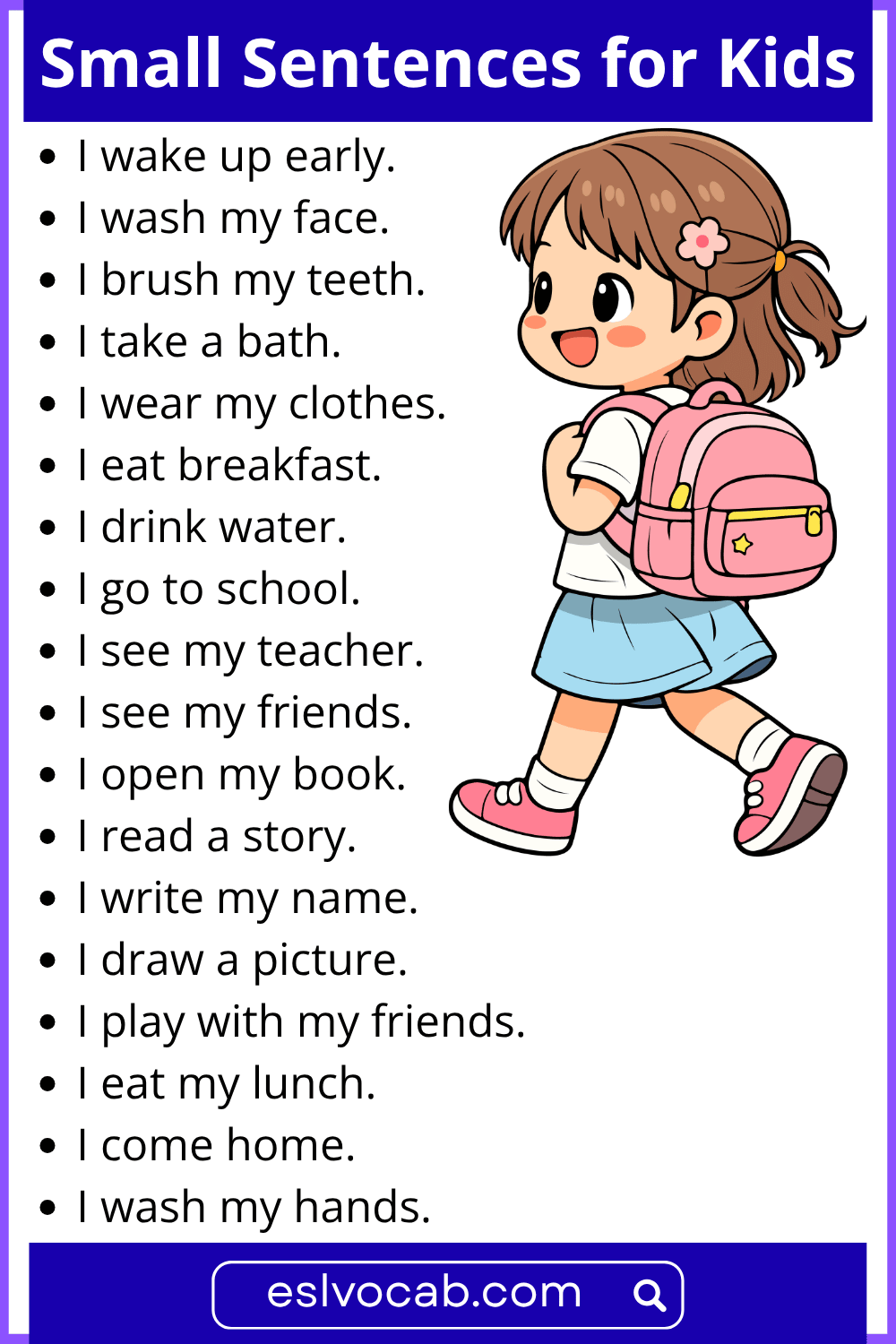
- I wake up early.
- I wash my face.
- I brush my teeth.
- I take a bath.
- I wear my clothes.
- I eat breakfast.
- I drink water.
- I go to school.
- I see my teacher.
- I see my friends.
- I open my book.
- I read a story.
- I write my name.
- I draw a picture.
- I play with my friends.
- I eat my lunch.
- I come home.
- I wash my hands.
- I play with my toys.
- I watch TV.
- I help my mom.
- I help my dad.
- I clean my room.
- I put away my toys.
- I eat dinner.
- I drink some milk.
- I read a book.
- I go to bed.
- I close my eyes.
- I sleep at night.
Parents can choose five or six sentences that match the child’s routine and repeat them every day. Children can also act out each sentence, which makes the meaning easier to understand.
Daily Life Small Sentences for Kindergarten with Pictures
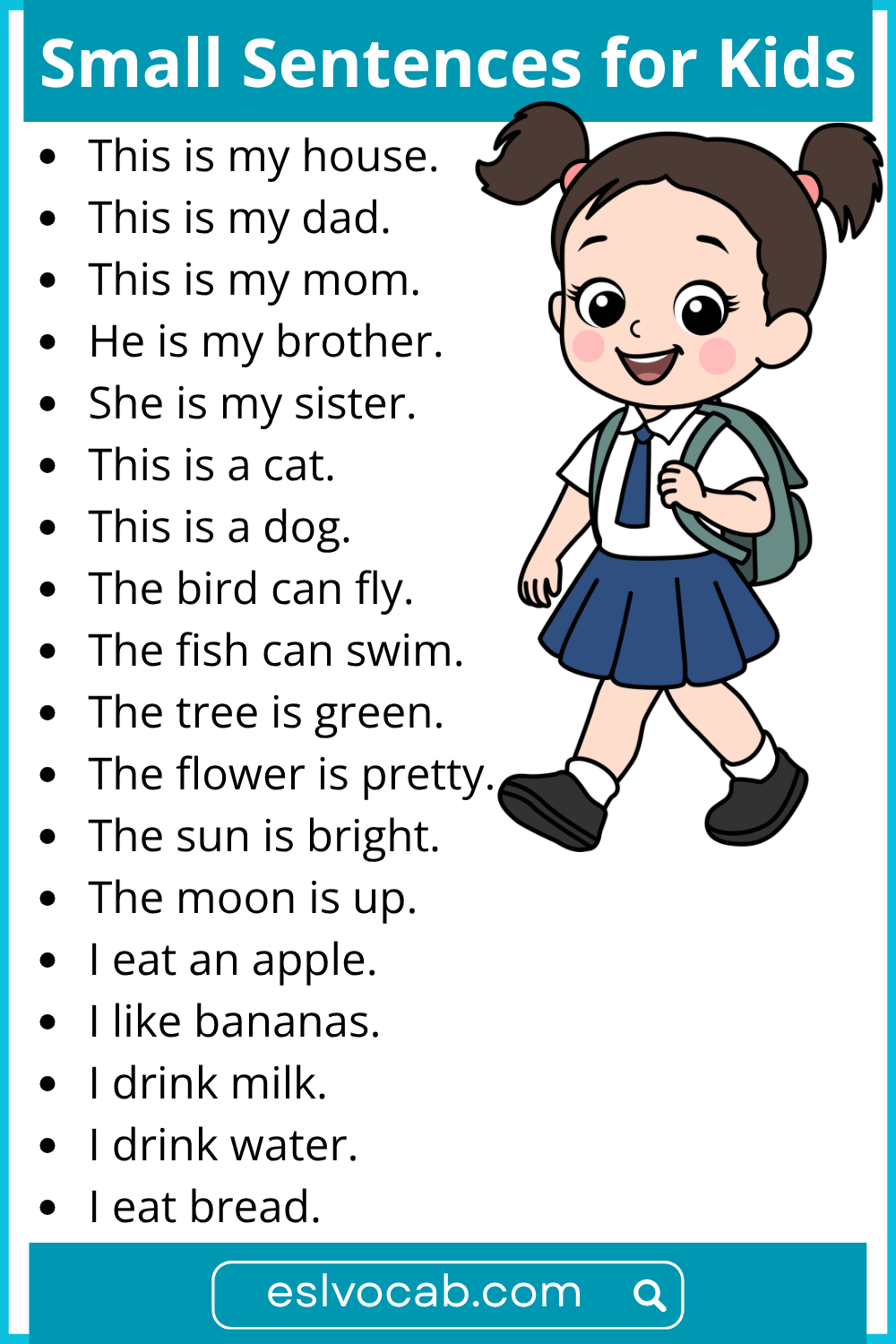
- 🏠 This is my house.
- 👨 This is my dad.
- 👩 This is my mom.
- 👦 He is my brother.
- 👧 She is my sister.
- 🐱 This is a cat.
- 🐶 This is a dog.
- 🐦 The bird can fly.
- 🐟 The fish can swim.
- 🌳 The tree is green.
- 🌸 The flower is pretty.
- ☀️ The sun is bright.
- 🌙 The moon is up.
- 🍎 I eat an apple.
- 🍌 I like bananas.
- 🥛 I drink milk.
- 💧 I drink water.
- 🍞 I eat bread.
- 🎒 This is my bag.
- 📚 These are my books.
- ✏️ This is my pencil.
- 🖍️ I have crayons.
- ⚽ I have a ball.
- 🧸 I have a teddy bear.
- 🚗 The car is red.
- 🚌 I ride the bus.
- 👟 These are my shoes.
- 🛏️ This is my bed.
- 🧼 I wash my hands.
- 🪥 I brush my teeth.
Requesting Sentences in English
Children often need to ask for something at home or school. Learning polite requesting sentences helps them communicate their needs clearly and respectfully.
- Can I have some water?
- Can I have a pencil?
- Can I have a book?
- Can I use your crayons?
- Can I play with you?
- Can I sit here?
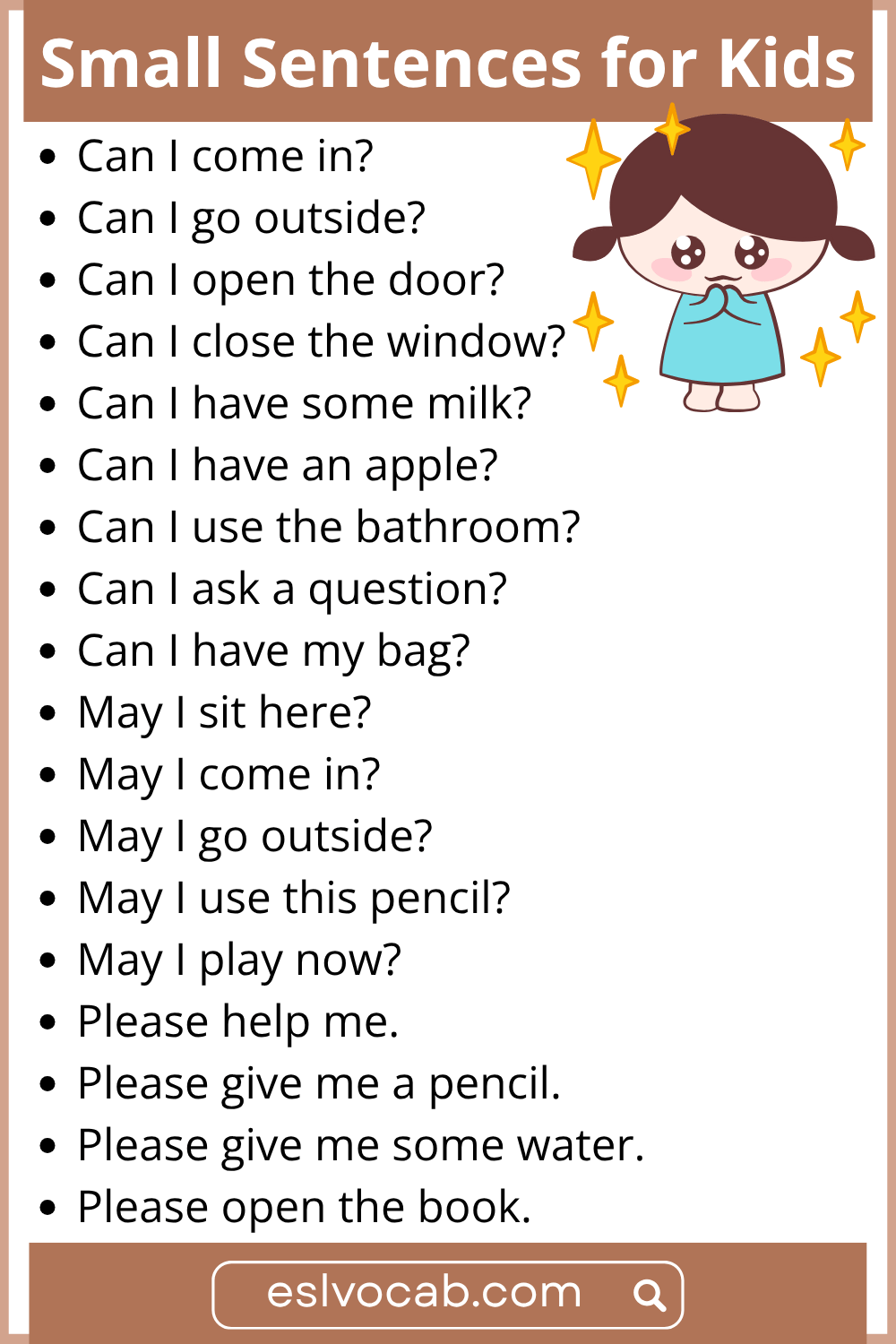
- Can I come in?
- Can I go outside?
- Can I open the door?
- Can I close the window?
- Can I have some milk?
- Can I have an apple?
- Can I use the bathroom?
- Can I ask a question?
- Can I have my bag?
- May I sit here?
- May I come in?
- May I go outside?
- May I use this pencil?
- May I play now?
- Please help me.
- Please give me a pencil.
- Please give me some water.
- Please open the book.
- Please help me with this.
Teach children to use words such as “please” and “thank you” with their requests. For example, “Can I have some water, please?” followed by “Thank you” is a simple and polite exchange.
Family Sentences for Kindergarten in English
Family is a familiar topic for young children, making it an excellent starting point for practicing simple English sentences.
- This is my family.
- This is my mom.
- This is my dad.
- This is my brother.
- This is my sister.
- I love my family.
- I love my mom.
- I love my dad.
- I love my brother.
- I love my sister.
- My mom is kind.
- My dad is strong.
- My brother is funny.
- My sister is nice.
- I play with my brother.
- I play with my sister.
- I help my mom.
- I help my dad.
- My family is happy.
- We live together.
- We eat together.
- We play together.
- We read together.
- We go to school.
- We go home together.
- My mom cooks food.
- My dad reads books.
- My brother likes toys.
- My sister likes dolls.
- I am happy with my family.
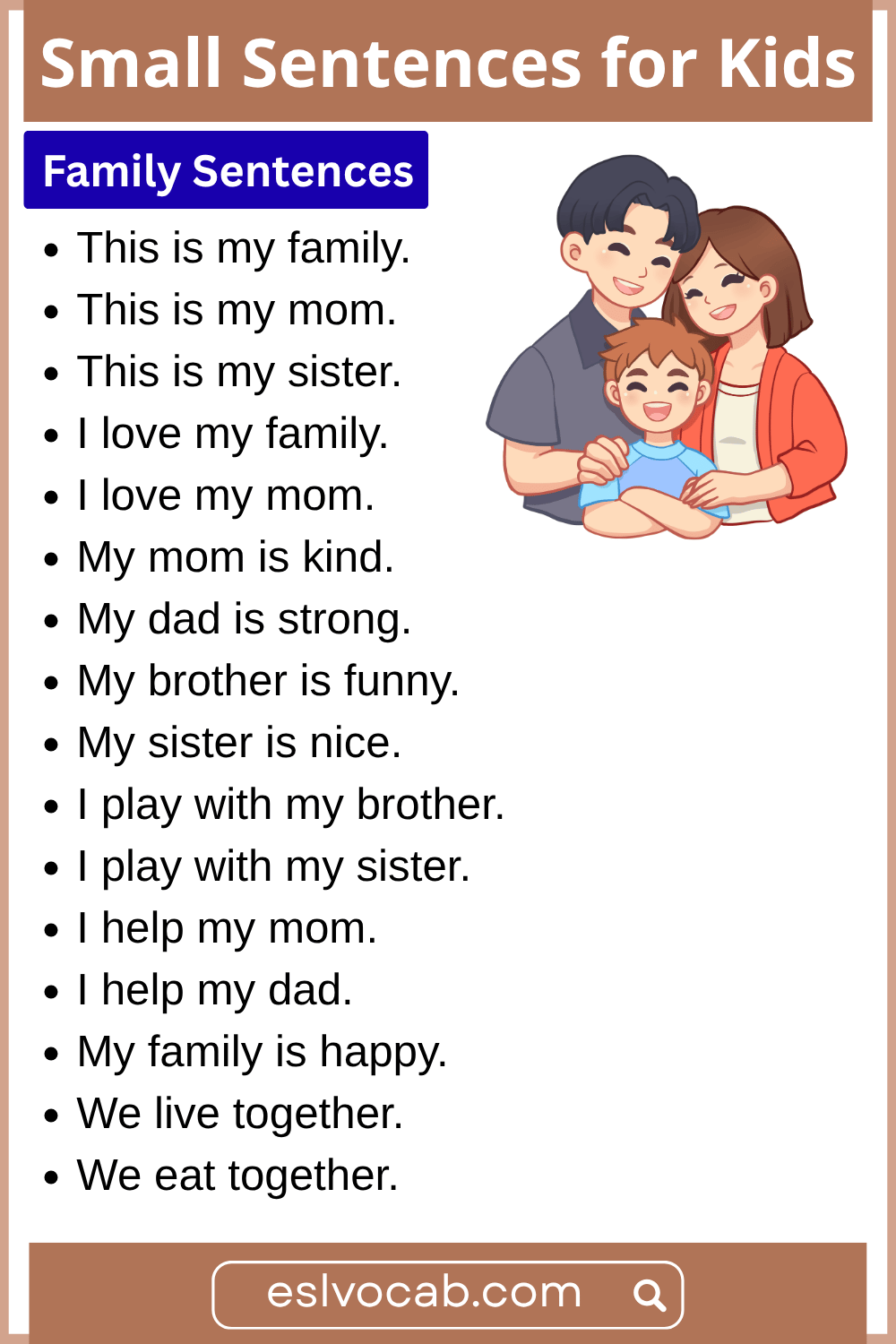
Children can practice these sentences while looking at a family picture or drawing their own family. This gives them a meaningful reason to use the language they are learning.
FAQs About Small Sentences for Kindergarten
Small sentences for kindergarten are short English sentences made with familiar words. They help young children practice speaking, reading, writing, and everyday communication.
An easy sentence has simple words and one clear idea. Examples include “I am happy,” “This is my book,” and “I like apples.”
Children can learn small sentences by listening, repeating, reading aloud, looking at pictures, copying sentences, and using them during everyday activities.
Children can practice a small group of sentences each day. Five to ten short sentences can provide useful practice without making the activity overwhelming.
Short sentences are easier for children to understand, remember, pronounce, read, and write. They also introduce basic sentence patterns in a manageable way.
Simple examples include “I am happy,” “I have a ball,” “This is my bag,” “I like milk,” and “The dog can run.”
Parents can use simple sentences during meals, playtime, bedtime, and daily routines. Asking children simple questions and encouraging complete answers can also build speaking practice.
Read more