
Learning English becomes easier when beginners start with short, useful sentences they can understand and use in real situations. Sentences for beginners provide a practical way to build vocabulary, improve speaking, and become comfortable with everyday English. Simple examples such as “I am ready,” “Where are you going?”, “Please help me,” and “I like this” can be used at home, at work, while traveling, or when meeting new people. Regular practice with easy English sentences helps learners speak more naturally and with greater confidence.
Why Learn Basic English Sentences?
Basic English sentences give beginners a practical foundation for speaking, listening, reading, and writing. Instead of learning individual words, learners see how common words work together in real communication.
Learning complete sentences also makes it easier to remember vocabulary and understand basic sentence patterns. Beginners can start with familiar expressions and gradually move toward longer conversations.
Basic English Sentences for Beginners
Basic English sentences introduce beginners to simple words and sentence patterns used in everyday communication. These examples are short, clear, and easy to practice aloud.
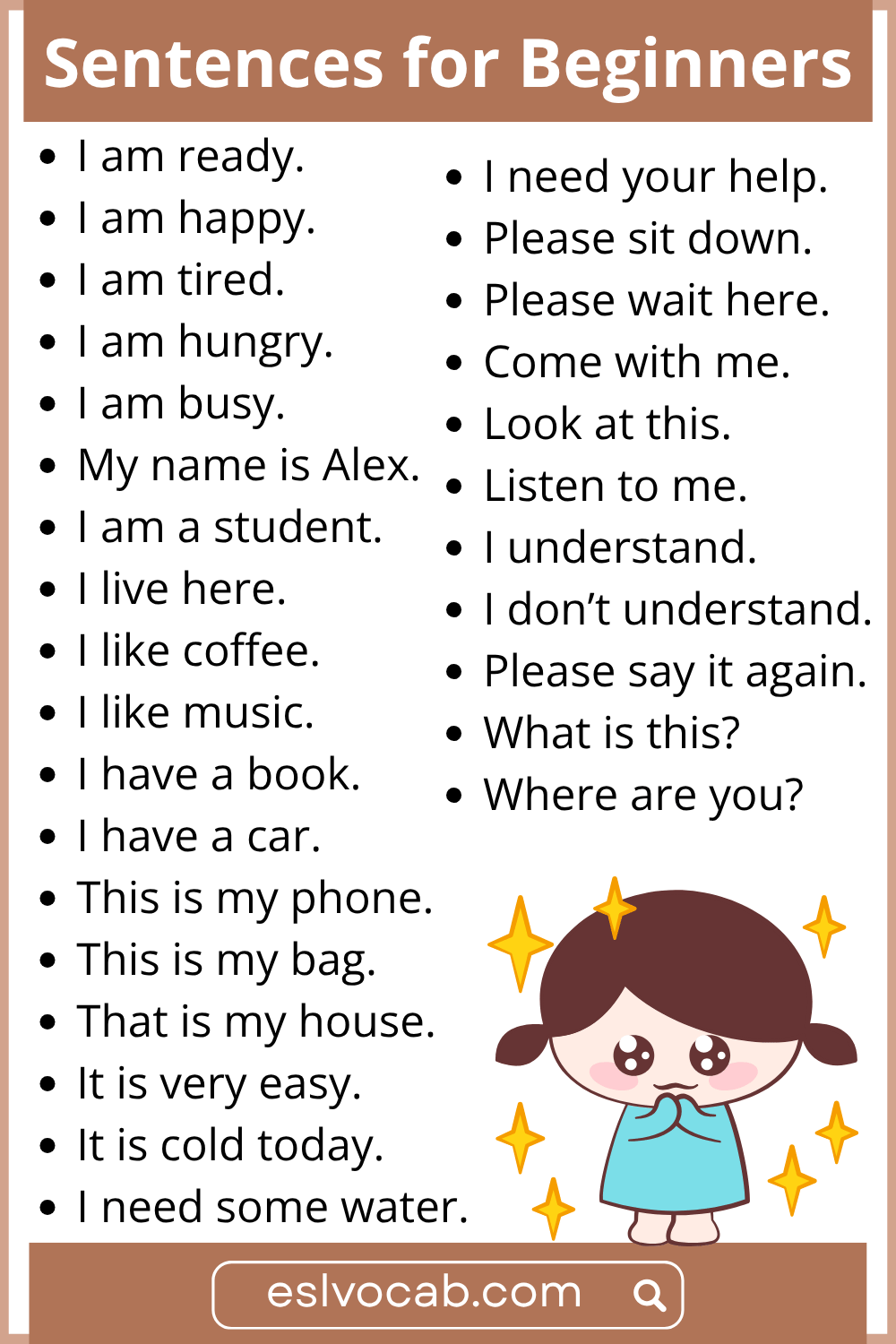
- I am ready.
- I am happy.
- I am tired.
- I am hungry.
- I am busy.
- My name is Alex.
- I am a student.
- I live here.
- I like coffee.
- I like music.
- I have a book.
- I have a car.
- This is my phone.
- This is my bag.
- That is my house.
- It is very easy.
- It is cold today.
- I need some water.
- I need your help.
- Please sit down.
- Please wait here.
- Come with me.
- Look at this.
- Listen to me.
- I understand.
- I don’t understand.
- Please say it again.
- What is this?
- Where are you?
- Thank you very much.
English Sentences for Daily Conversation
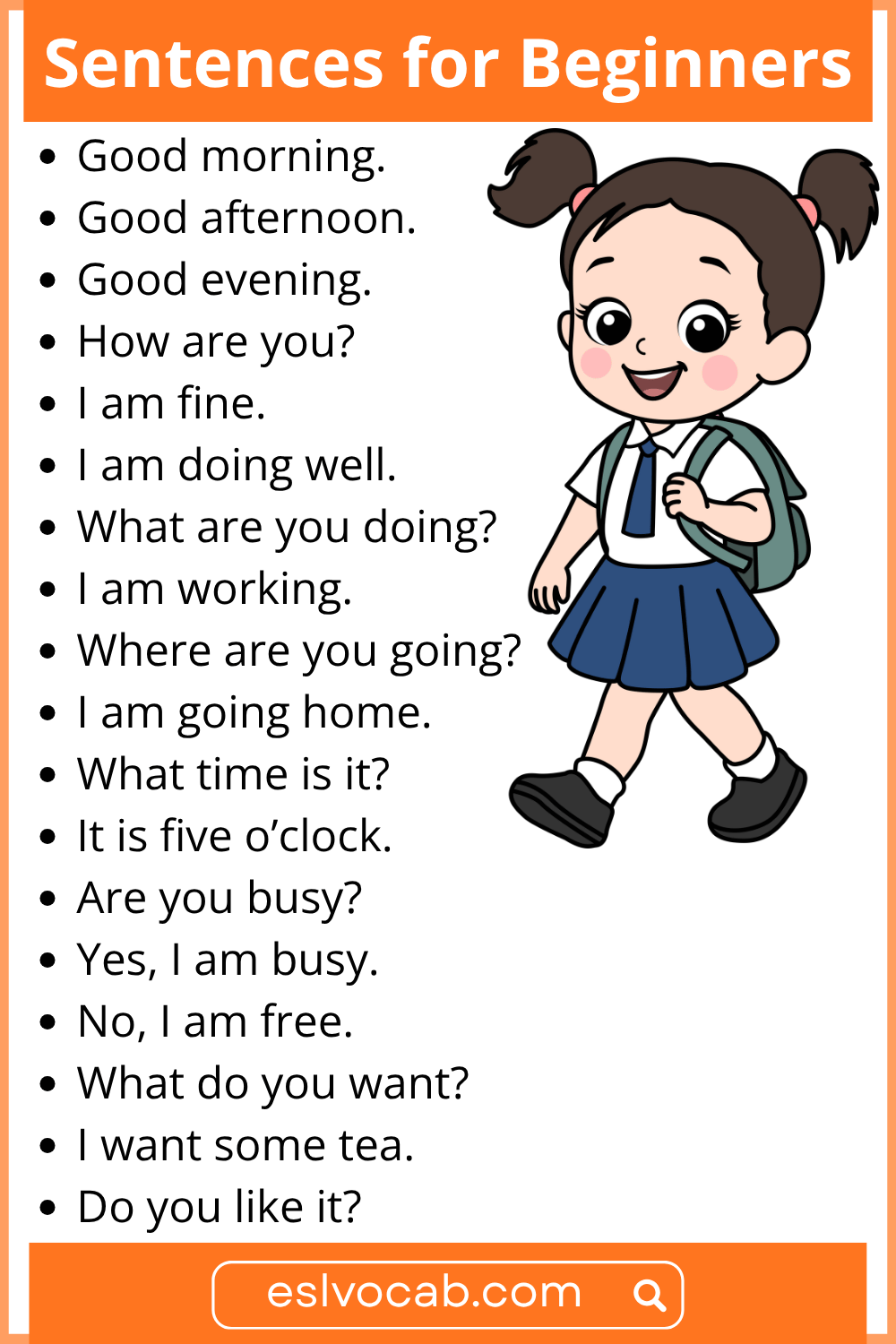
Daily conversation sentences help beginners handle simple interactions with family, friends, coworkers, and other people throughout the day.
- Good morning.
- Good afternoon.
- Good evening.
- How are you?
- I am fine.
- I am doing well.
- What are you doing?
- I am working.
- Where are you going?
- I am going home.
- What time is it?
- It is five o’clock.
- Are you busy?
- Yes, I am busy.
- No, I am free.
- What do you want?
- I want some tea.
- Do you like it?
- Yes, I like it.
- No, I don’t like it.
- Can you help me?
- Sure, I can help.
- Please come in.
- Please wait a minute.
- See you later.
- See you tomorrow.
- Have a nice day.
- Take care.
- That’s okay.
- You are welcome.
English Sentences for Introducing Yourself
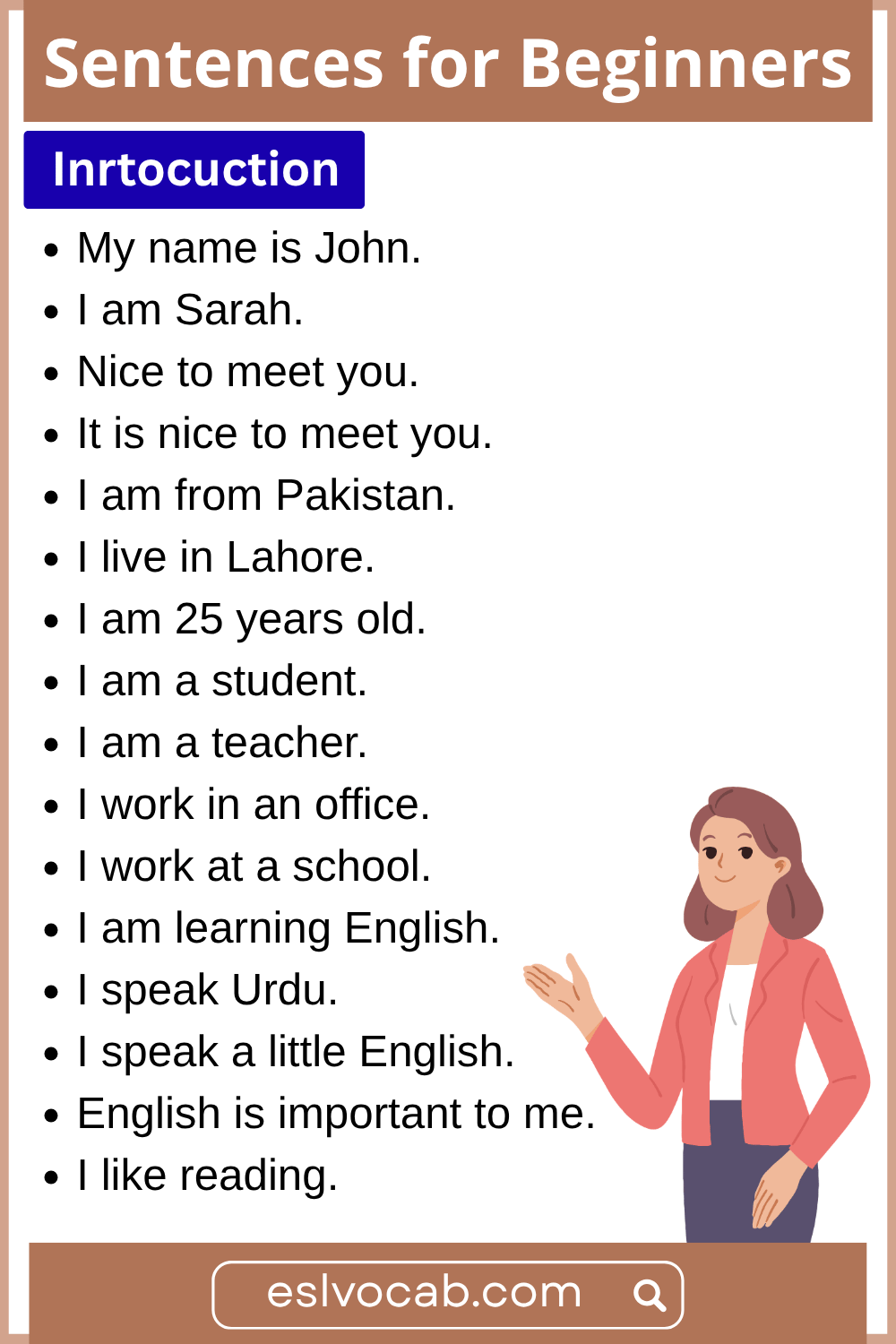
Self-introduction sentences help beginners share their name, background, interests, and basic personal information when meeting someone for the first time.
- My name is John.
- I am Sarah.
- Nice to meet you.
- It is nice to meet you.
- I am from Pakistan.
- I live in Lahore.
- I am 25 years old.
- I am a student.
- I am a teacher.
- I work in an office.
- I work at a school.
- I am learning English.
- I speak Urdu.
- I speak a little English.
- English is important to me.
- I like reading.
- I like music.
- I like watching movies.
- I enjoy cooking.
- I love traveling.
- My hobby is reading.
- My favorite color is blue.
- My favorite food is rice.
- I have two brothers.
- I have one sister.
- I live with my family.
- I am happy to be here.
- I am glad to meet you.
- Thank you for meeting me.
- It was nice talking to you.
Common English Sentences Used Every Day
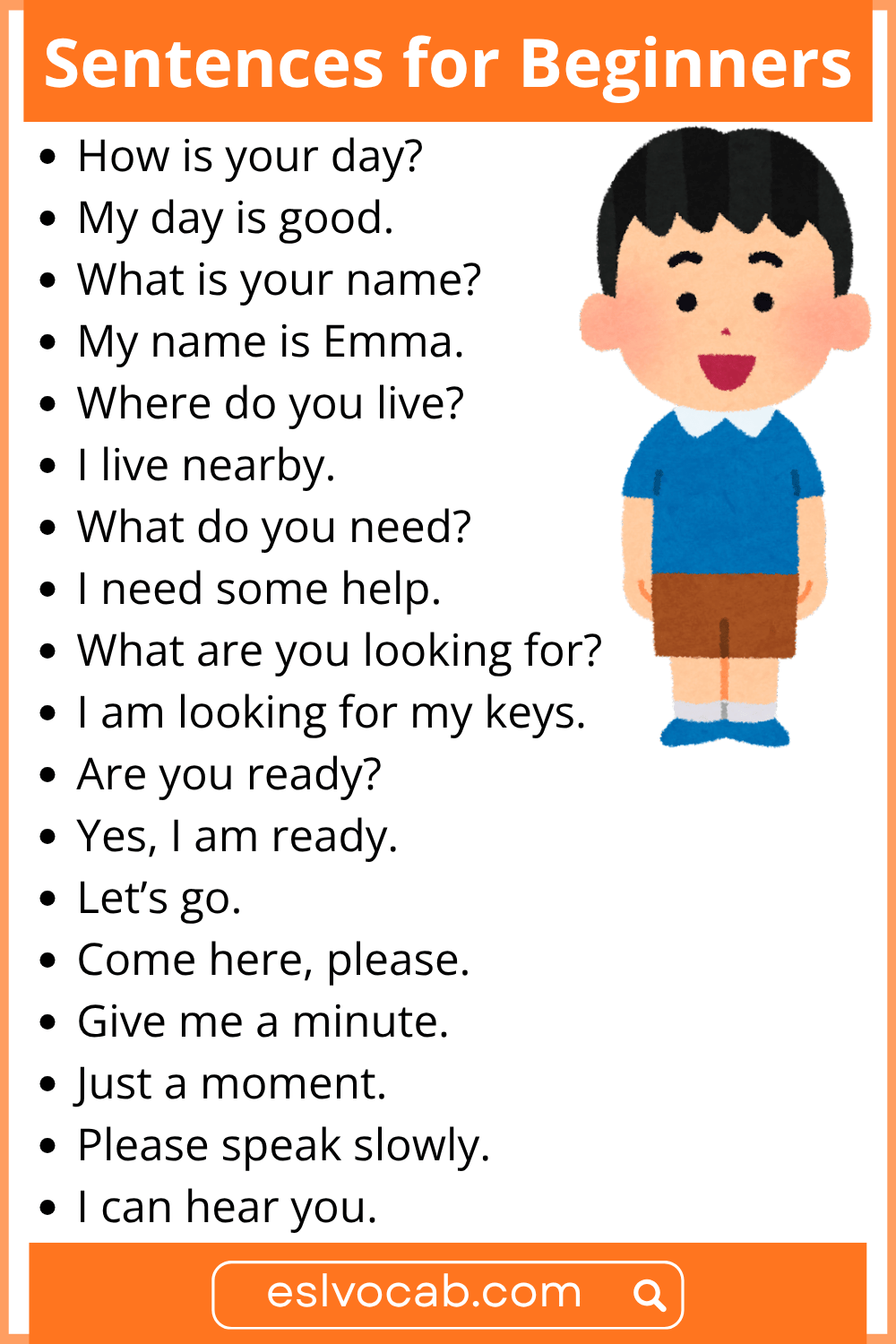
Common English sentences are short expressions people use regularly for greetings, requests, answers, directions, feelings, and simple conversations in everyday situations.
- How is your day?
- My day is good.
- What is your name?
- My name is Emma.
- Where do you live?
- I live nearby.
- What do you need?
- I need some help.
- What are you looking for?
- I am looking for my keys.
- Are you ready?
- Yes, I am ready.
- Let’s go.
- Come here, please.
- Give me a minute.
- Just a moment.
- Please speak slowly.
- I can hear you.
- I cannot hear you.
- I know that.
- I don’t know.
- I remember now.
- I forgot.
- That is right.
- That is wrong.
- It is okay.
- No problem.
- Be careful.
- Don’t worry.
- Have a good day.
Easy English Sentences for Beginners to Speak
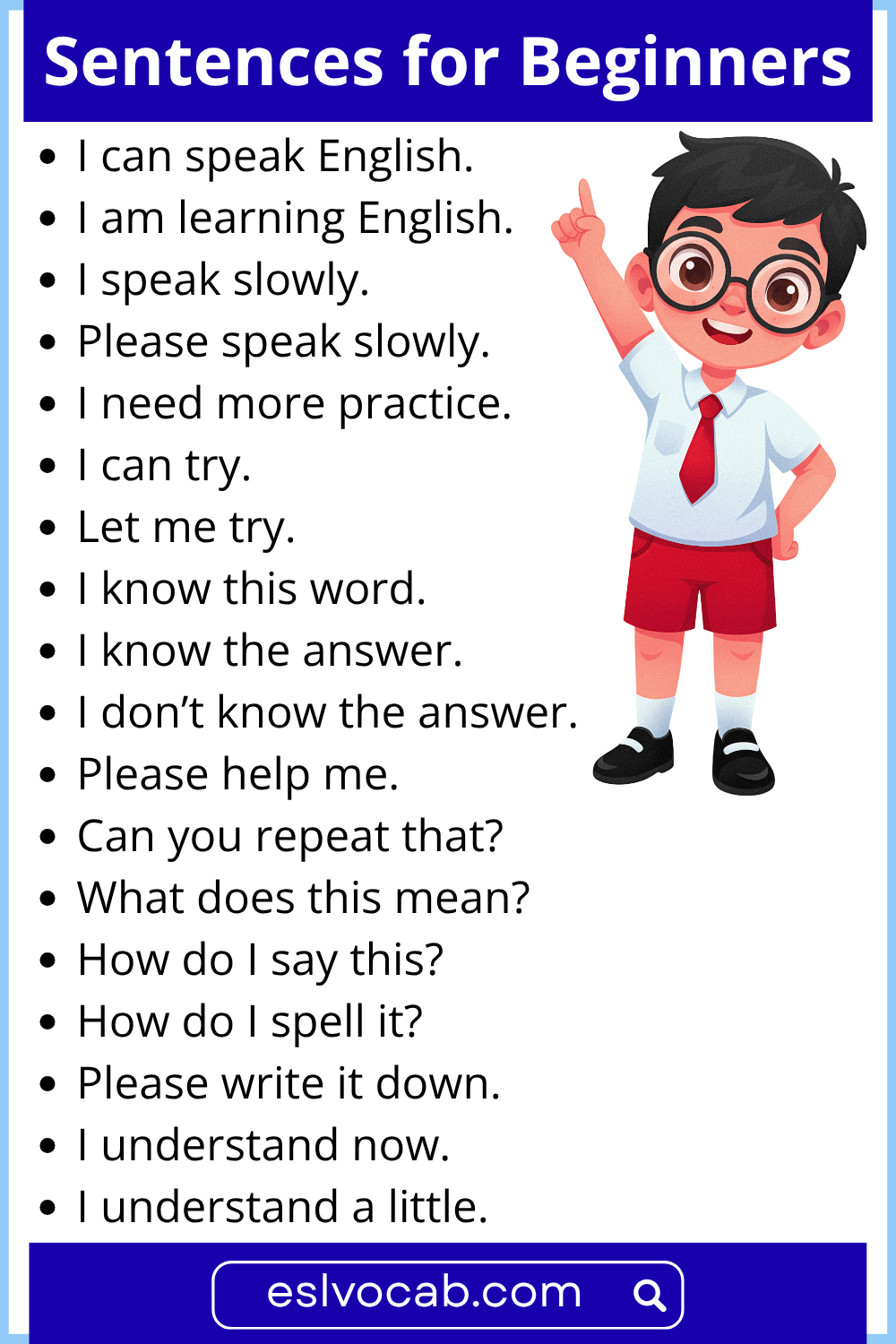
Easy English sentences give new learners simple expressions they can say aloud without using difficult vocabulary or complicated grammar structures.
- I can speak English.
- I am learning English.
- I speak slowly.
- Please speak slowly.
- I need more practice.
- I can try.
- Let me try.
- I know this word.
- I know the answer.
- I don’t know the answer.
- Please help me.
- Can you repeat that?
- What does this mean?
- How do I say this?
- How do I spell it?
- Please write it down.
- I understand now.
- I understand a little.
- I don’t understand.
- Please explain it.
- I have a question.
- Can I ask something?
- Can you say it again?
- Please wait for me.
- I am ready to learn.
- I want to improve.
- I practice every day.
- English is easy.
- I enjoy learning.
- I will try again.
Beginners English Sentences for Work
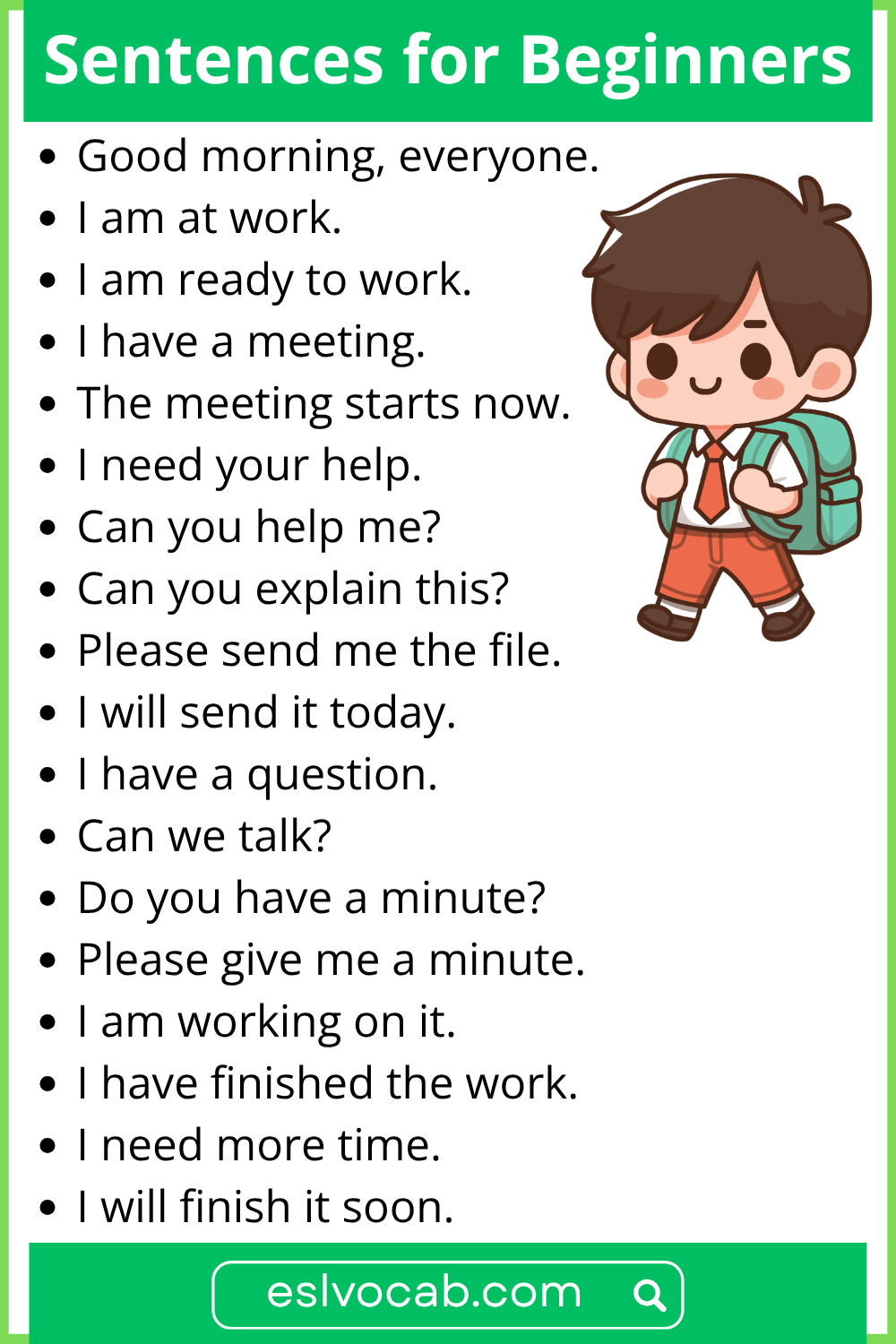
Workplace English sentences help beginners communicate with coworkers, managers, customers, and other people during common professional situations.
- Good morning, everyone.
- I am at work.
- I am ready to work.
- I have a meeting.
- The meeting starts now.
- I need your help.
- Can you help me?
- Can you explain this?
- Please send me the file.
- I will send it today.
- I have a question.
- Can we talk?
- Do you have a minute?
- Please give me a minute.
- I am working on it.
- I have finished the work.
- I need more time.
- I will finish it soon.
- When is the meeting?
- What time does it start?
- Where is the meeting room?
- I am in the office.
- I am working from home.
- Please check this.
- Is this correct?
- I will check it.
- I understand the task.
- I don’t understand the task.
- Thank you for your help.
- Have a good day.
Best English Sentences for Travel Time
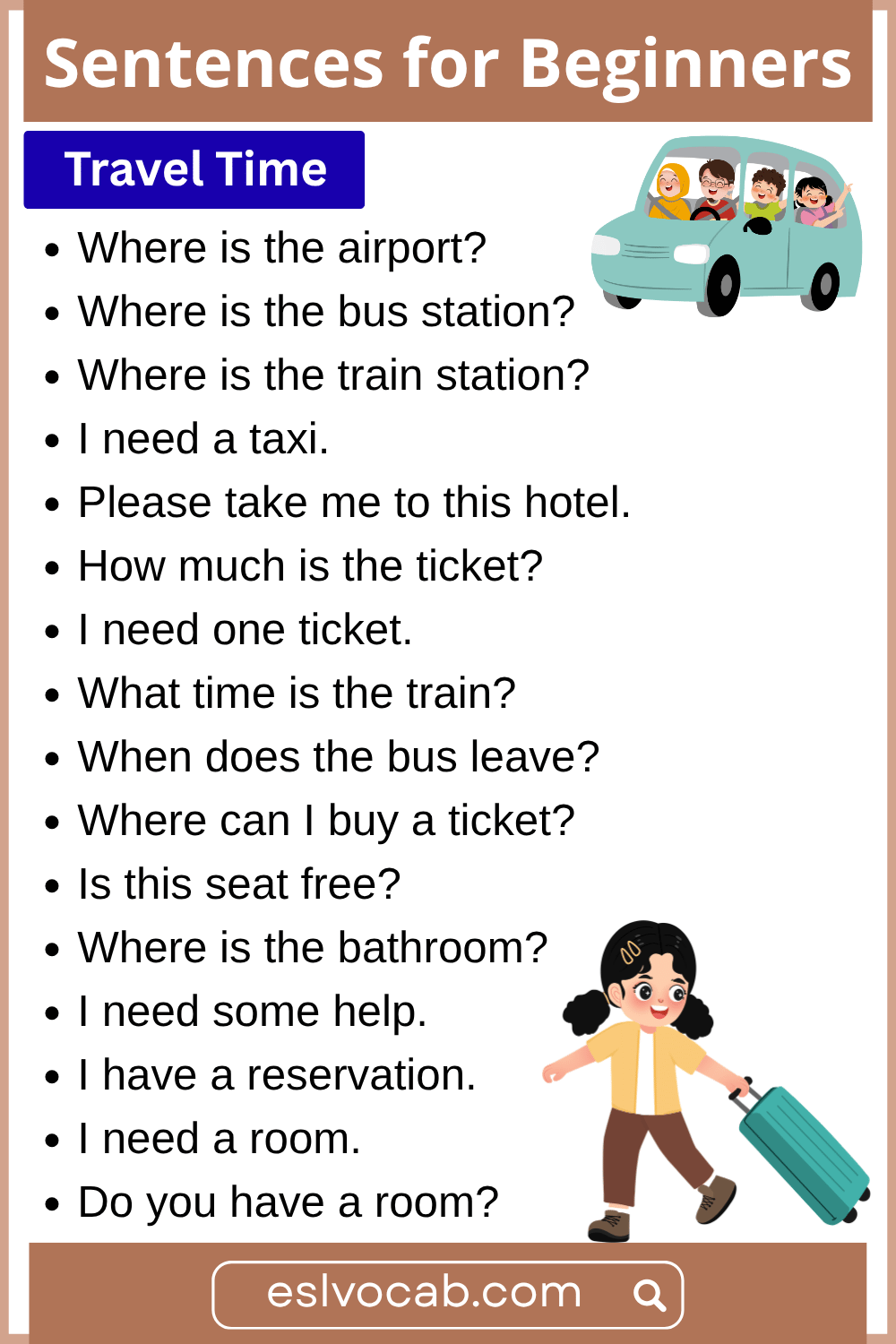
Travel English sentences help beginners communicate at airports, hotels, restaurants, stations, shops, and other places they may visit during a trip.
- Where is the airport?
- Where is the bus station?
- Where is the train station?
- I need a taxi.
- Please take me to this hotel.
- How much is the ticket?
- I need one ticket.
- What time is the train?
- When does the bus leave?
- Where can I buy a ticket?
- Is this seat free?
- Where is the bathroom?
- I need some help.
- I have a reservation.
- I need a room.
- Do you have a room?
- How much is the room?
- What time is check-in?
- What time is check-out?
- Where is my room?
- Can I have some water?
- I would like some food.
- Can I see the menu?
- How much is this?
- Can I pay by card?
- Where can I get a taxi?
- I am lost.
- Can you show me the way?
- Is it far from here?
- Thank you for your help.
Positive English Phrases for Beginner Students
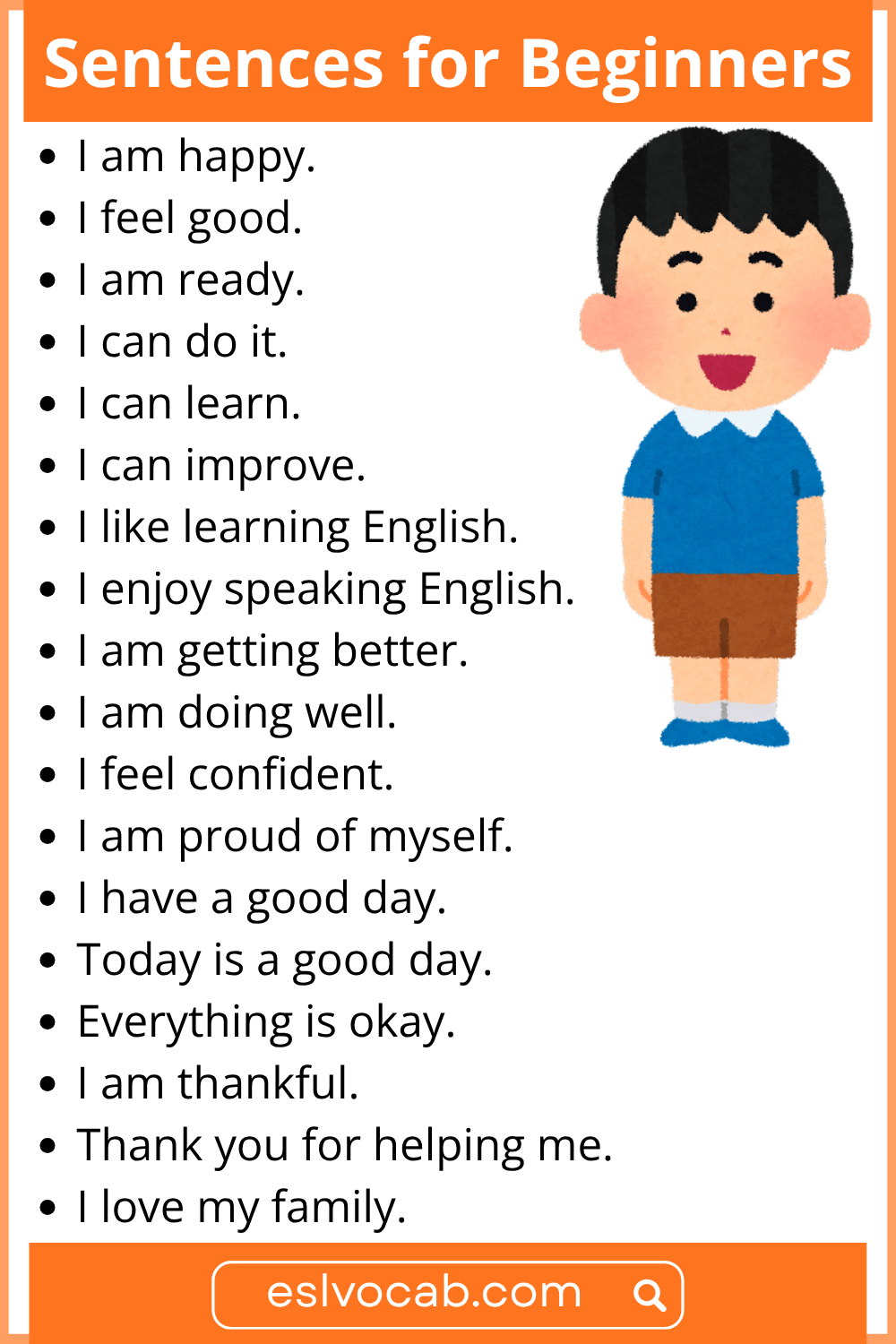
Positive English sentences help beginners express happiness, confidence, kindness, gratitude, encouragement, and hopeful ideas using simple and natural everyday language.
- I am happy.
- I feel good.
- I am ready.
- I can do it.
- I can learn.
- I can improve.
- I like learning English.
- I enjoy speaking English.
- I am getting better.
- I am doing well.
- I feel confident.
- I am proud of myself.
- I have a good day.
- Today is a good day.
- Everything is okay.
- I am thankful.
- Thank you for helping me.
- I love my family.
- I love my friends.
- I like my work.
- I like my school.
- I enjoy my life.
- I have a good idea.
- This is a great idea.
- That sounds good.
- We can do it.
- Let’s try together.
- I will try again.
- I believe in myself.
- I am happy to learn.
Negative English Sentences for Beginners
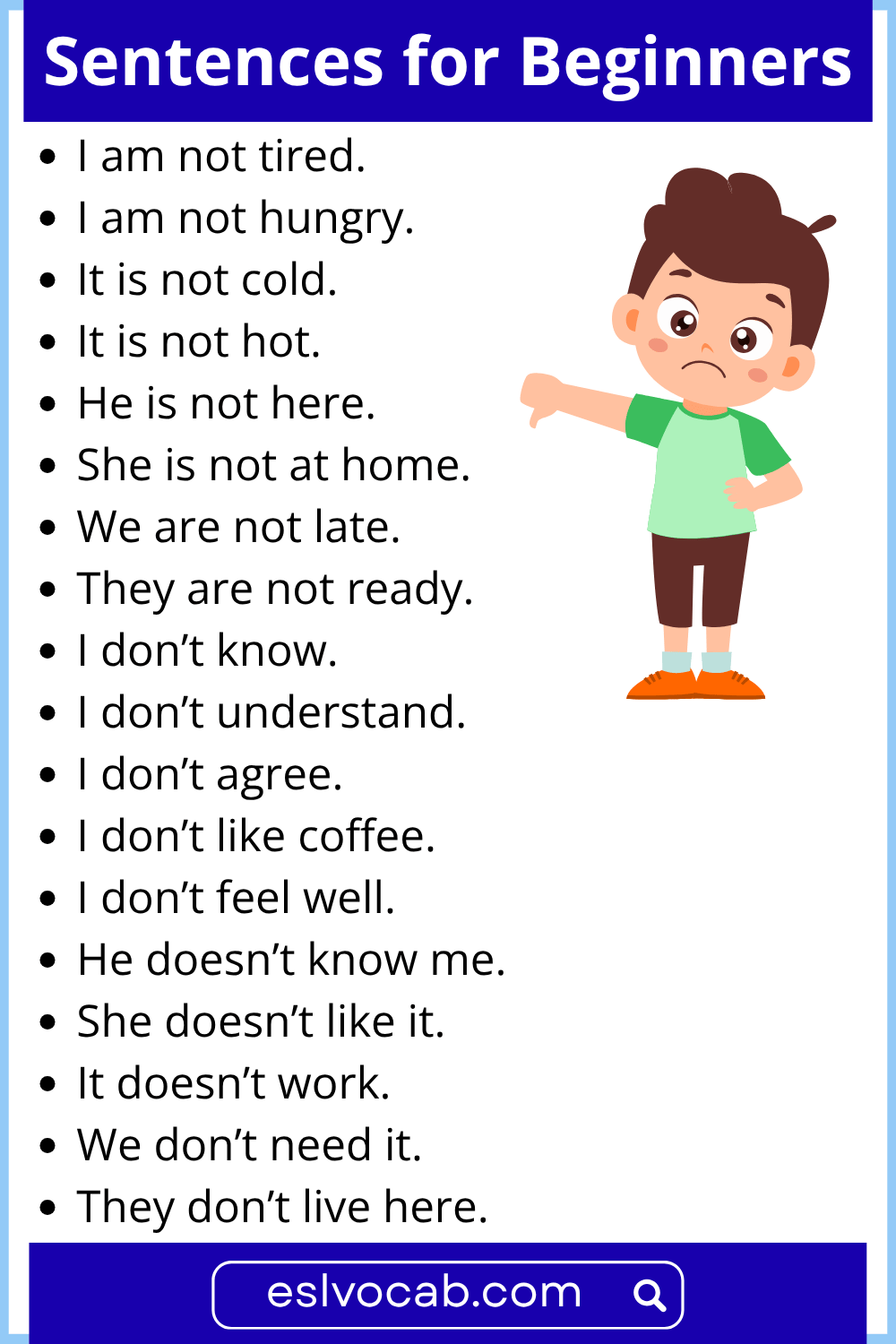
Negative English sentences teach beginners how to say that something is not true, does not happen, or is not wanted using simple forms such as “not,” “don’t,” and “doesn’t.”
- I am not tired.
- I am not hungry.
- I am not busy.
- I am not ready.
- I am not sure.
- I am not angry.
- This is not mine.
- This is not my bag.
- That is not my car.
- It is not cold.
- It is not hot.
- He is not here.
- She is not at home.
- We are not late.
- They are not ready.
- I don’t know.
- I don’t understand.
- I don’t agree.
- I don’t like coffee.
- I don’t want tea.
- I don’t need help.
- I don’t have money.
- I don’t have time.
- I don’t remember.
- I don’t feel well.
- He doesn’t know me.
- She doesn’t like it.
- It doesn’t work.
- We don’t need it.
- They don’t live here.
100+ Short English Sentences for Beginners
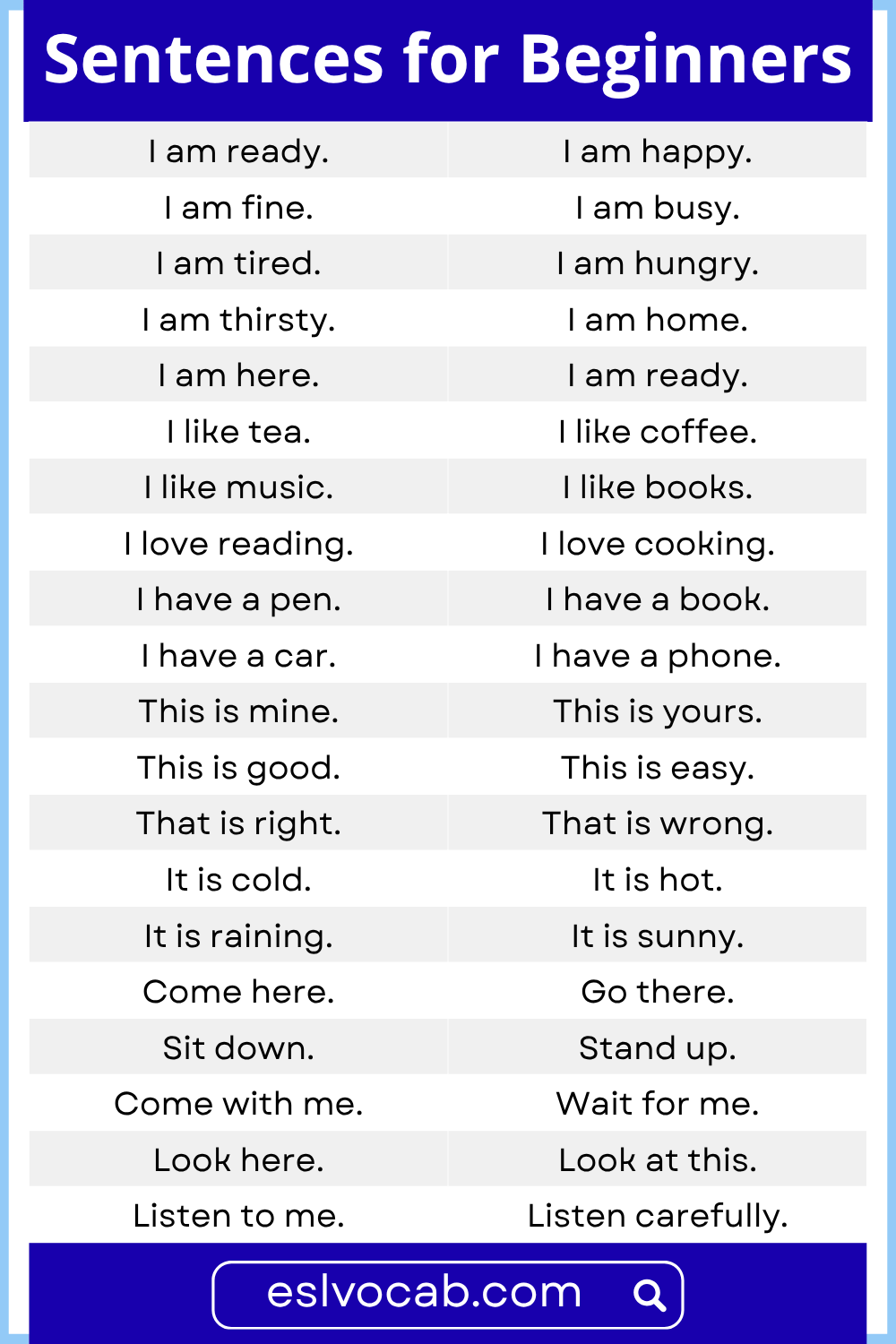
Short sentences are useful for daily English practice because beginners can read, repeat, memorize, and use them without dealing with complicated grammar. Use this list for speaking, writing, and quick revision.
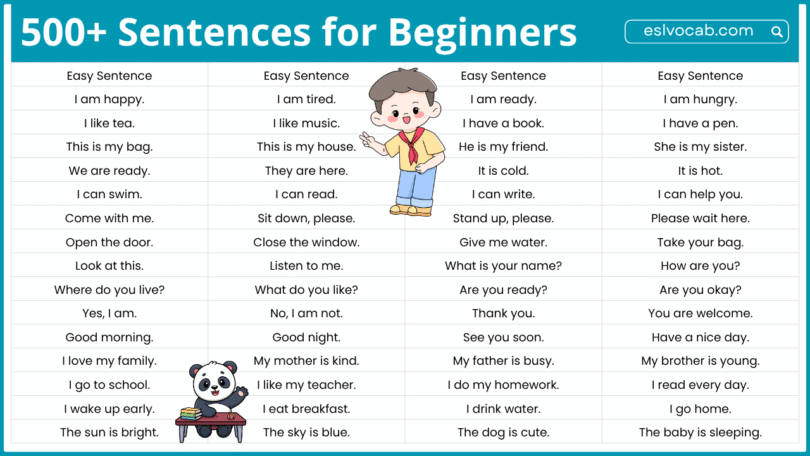
| I am ready. | I am happy. |
| I am fine. | I am busy. |
| I am tired. | I am hungry. |
| I am thirsty. | I am home. |
| I am here. | I am ready. |
| I like tea. | I like coffee. |
| I like music. | I like books. |
| I love reading. | I love cooking. |
| I have a pen. | I have a book. |
| I have a car. | I have a phone. |
| This is mine. | This is yours. |
| This is good. | This is easy. |
| That is right. | That is wrong. |
| It is cold. | It is hot. |
| It is raining. | It is sunny. |
| Come here. | Go there. |
| Sit down. | Stand up. |
| Come with me. | Wait for me. |
| Look here. | Look at this. |
| Listen to me. | Listen carefully. |
| Please wait. | Please sit. |
| Please help me. | Please come in. |
| Thank you. | You are welcome. |
| Excuse me. | I am sorry. |
| No problem. | That’s okay. |
| Good morning. | Good afternoon. |
| Good evening. | Good night. |
| See you. | See you soon. |
| Take care. | Have fun. |
| Let’s go. | Let’s start. |
| Let’s eat. | Let’s talk. |
| I can swim. | I can run. |
| I can read. | I can write. |
| I can help. | I can try. |
| I can do it. | I can learn. |
| I know. | I don’t know. |
| I understand. | I don’t understand. |
| I remember. | I forgot. |
| I agree. | I don’t agree. |
| I need help. | I need water. |
| I need time. | I need rest. |
| I want food. | I want tea. |
| I want this. | I want that. |
| I don’t want it. | I don’t need it. |
| Are you ready? | Are you okay? |
| Are you busy? | Are you free? |
| Are you hungry? | Are you tired? |
| What is this? | What is that? |
| What is your name? | Where are you? |
| Where do you live? | Where is my bag? |
| Where is the shop? | Where is the bus? |
| Who is he? | Who is she? |
| What do you need? | What do you want? |
| When can we go? | When does it start? |
| Why are you here? | Why are you late? |
| Can you help me? | Can you hear me? |
| Can you come? | Can you wait? |
| Can I sit here? | Can I come in? |
| Can I ask you? | Can I try? |
| May I go? | May I sit here? |
| Please repeat. | Please speak slowly. |
| Say it again. | Write it down. |
| Read this. | Look at this. |
| Open the door. | Close the door. |
| Open your book. | Close your book. |
| Give me a minute. | Wait a moment. |
| I am coming. | I am going. |
| I am leaving. | I am working. |
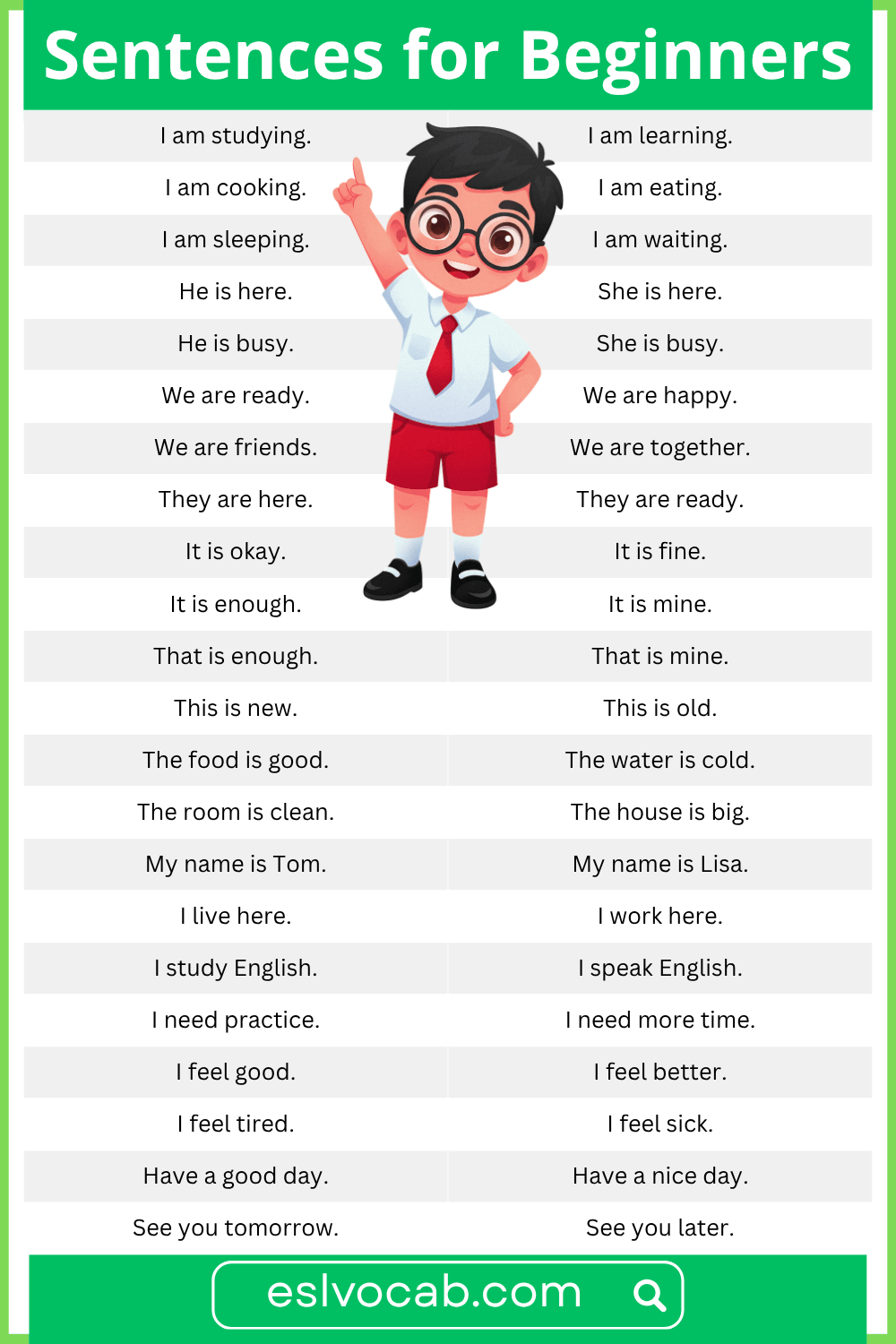
| I am studying. | I am learning. |
| I am cooking. | I am eating. |
| I am sleeping. | I am waiting. |
| He is here. | She is here. |
| He is busy. | She is busy. |
| We are ready. | We are happy. |
| We are friends. | We are together. |
| They are here. | They are ready. |
| It is okay. | It is fine. |
| It is enough. | It is mine. |
| That is enough. | That is mine. |
| This is new. | This is old. |
| The food is good. | The water is cold. |
| The room is clean. | The house is big. |
| My name is Tom. | My name is Lisa. |
| I live here. | I work here. |
| I study English. | I speak English. |
| I need practice. | I need more time. |
| I feel good. | I feel better. |
| I feel tired. | I feel sick. |
| Have a good day. | Have a nice day. |
| See you tomorrow. | See you later. |
FAQs About Sentences for Beginners
Sentences for beginners are short and simple English expressions that help new learners practice everyday vocabulary, basic grammar, speaking, reading, and communication.
A beginner should start with useful sentences for greetings, introductions, requests, daily activities, feelings, questions, and simple conversations.
Read a few sentences each day, say them aloud, write them down, listen to their pronunciation, and use them in simple conversations.
Beginners can start with five to ten sentences a day. Regular practice and repeated use are more useful than trying to memorize a very large list at once.
Easy examples include “I am ready,” “I need help,” “I like this,” “Where are you?”, “Please wait,” and “I don’t understand.”
Beginners can improve by speaking short sentences every day, repeating common expressions, listening to simple English, practicing conversations, and using newly learned sentences in real situations.
Common daily sentences include “How are you?”, “What are you doing?”, “I am fine,” “Can you help me?”, “Please wait,” and “See you later.”
Start with simple information such as your name, where you live, your work or studies, your interests, and your hobbies. For example, “My name is Sara. I am a student.”
Simple workplace sentences include “I have a meeting,” “Can you help me?”, “Please send the file,” “I am working on it,” and “I have finished the work.”
Read more