
Young children learn English more easily when they practice simple words in meaningful sentences. Sentences for kids can help kindergarten learners improve reading, writing, speaking, and everyday communication. Short English sentences are especially useful because children can understand and repeat them without feeling overwhelmed. For example: “I like apples.” “She is my friend.” “The sun is hot.” With regular practice, these easy sentences for children can become a natural part of classroom activities and daily conversations.
How Can Kindergarten Kids Learn Easy Sentences?
Kindergarten kids can learn easy sentences through short, repeated practice and familiar examples. At this age, children learn best when English feels connected to things they already know and enjoy.
Start with sentences that contain common words such as “I,” “my,” “this,” “is,” “like,” and “have.” Once children become comfortable with these words, introduce slightly longer sentences.
Here are some simple ways to help children learn:
- Start with short sentences: Begin with three- to five-word sentences that are easy to read and say.
- Use familiar topics: Talk about toys, family members, food, animals, school, colors, and daily routines.
- Read sentences aloud: Let children listen to the sentence before asking them to read it themselves.
- Repeat important sentences: Repetition helps children remember new vocabulary and sentence patterns.
- Use pictures: Pictures can help children understand the meaning of unfamiliar words.
- Ask simple questions: Ask questions such as “What is this?” or “What color is it?” and encourage children to answer in complete sentences.
- Practice writing: After reading a sentence, let children copy it or write it independently.
- Use sentence games: Matching words, arranging word cards, and completing sentences can make practice more enjoyable.
- Praise their effort: Positive feedback can encourage children to keep practicing English.
- Practice every day: A few minutes of daily practice is often easier for young learners than one long lesson.
Parents and teachers can also connect sentences to everyday activities. During breakfast, a child might say, “I like milk.” While getting ready for school, they can practice, “I have my bag.” These small moments turn English practice into a natural part of the day.
Easy Sentences for Kids in English with Pictures
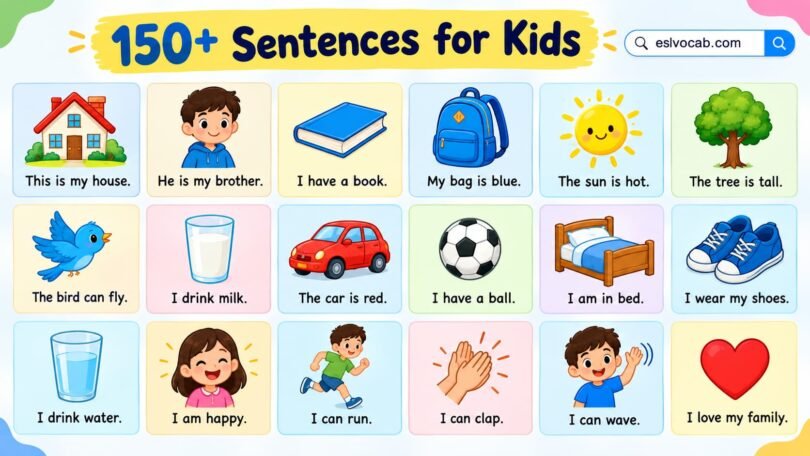
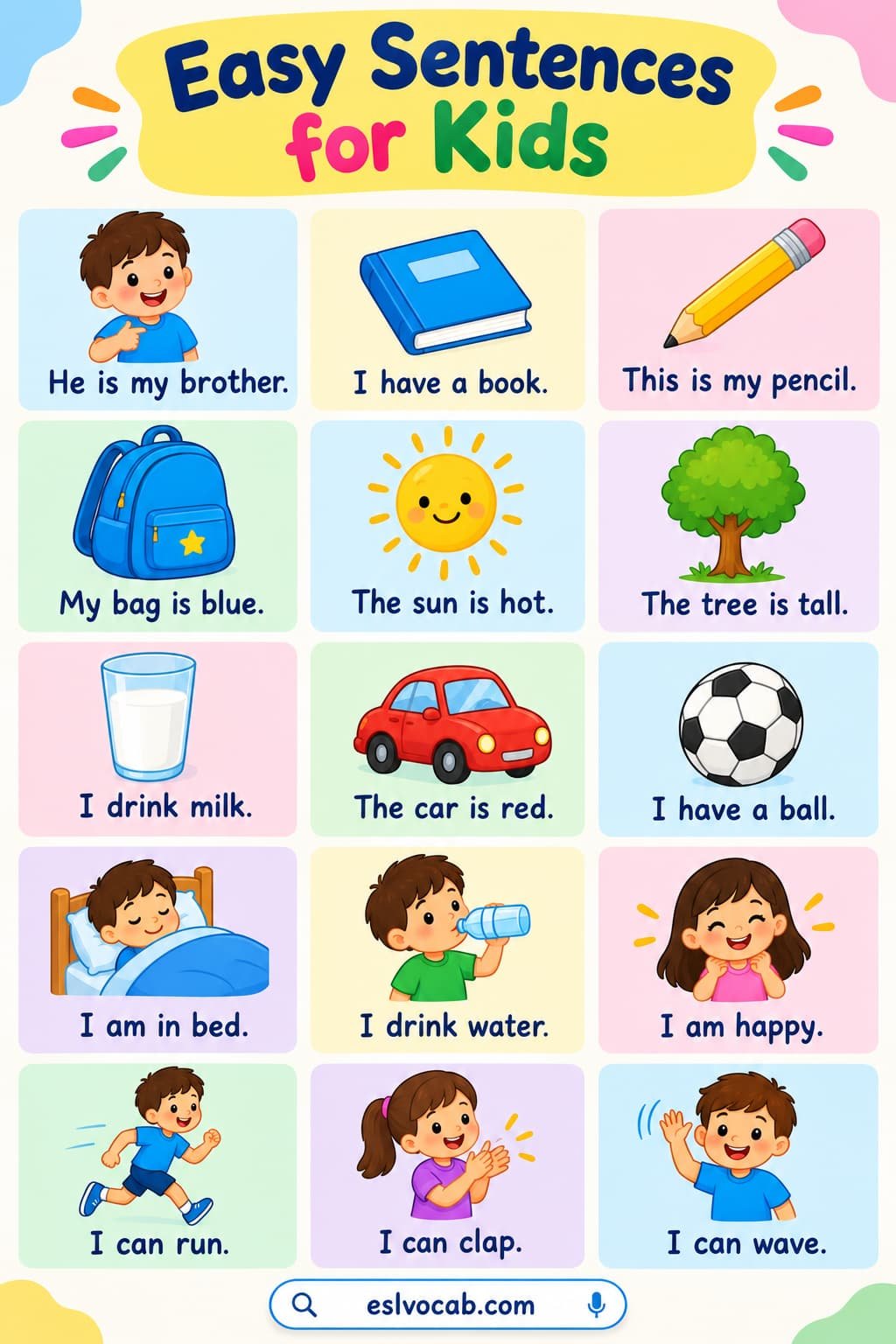
Easy English sentences help children connect simple words with familiar objects, people, actions, and situations. Picture-based learning can make these sentences easier to understand and remember.
- 🐱 This is a cat.
- 🐶 The dog is cute.
- 🍎 I like apples.
- 🏠 This is my house.
- 👩 This is my mom.
- 👨 This is my dad.
- 👧 She is my sister.
- 👦 He is my brother.
- 📚 I have a book.
- ✏️ This is my pencil.
- 🎒 My bag is blue.
- ☀️ The sun is hot.
- 🌙 The moon is bright.
- 🌳 The tree is tall.
- 🌸 The flower is pretty.
- 🐟 The fish can swim.
- 🐦 The bird can fly.
- 🥛 I drink milk.
- 🍌 The banana is yellow.
- 🚗 The car is red.
- ⚽ I have a ball.
- 🧸 This is my teddy bear.
- 🛏️ I am in bed.
- 👟 I wear my shoes.
- 💧 I drink water.
- 😊 I am happy.
- 🏃 I can run.
- 🖐️ I can clap.
- 👋 I can wave.
- ❤️ I love my family.
Positive Sentences for Kindergarten Kids to Learn
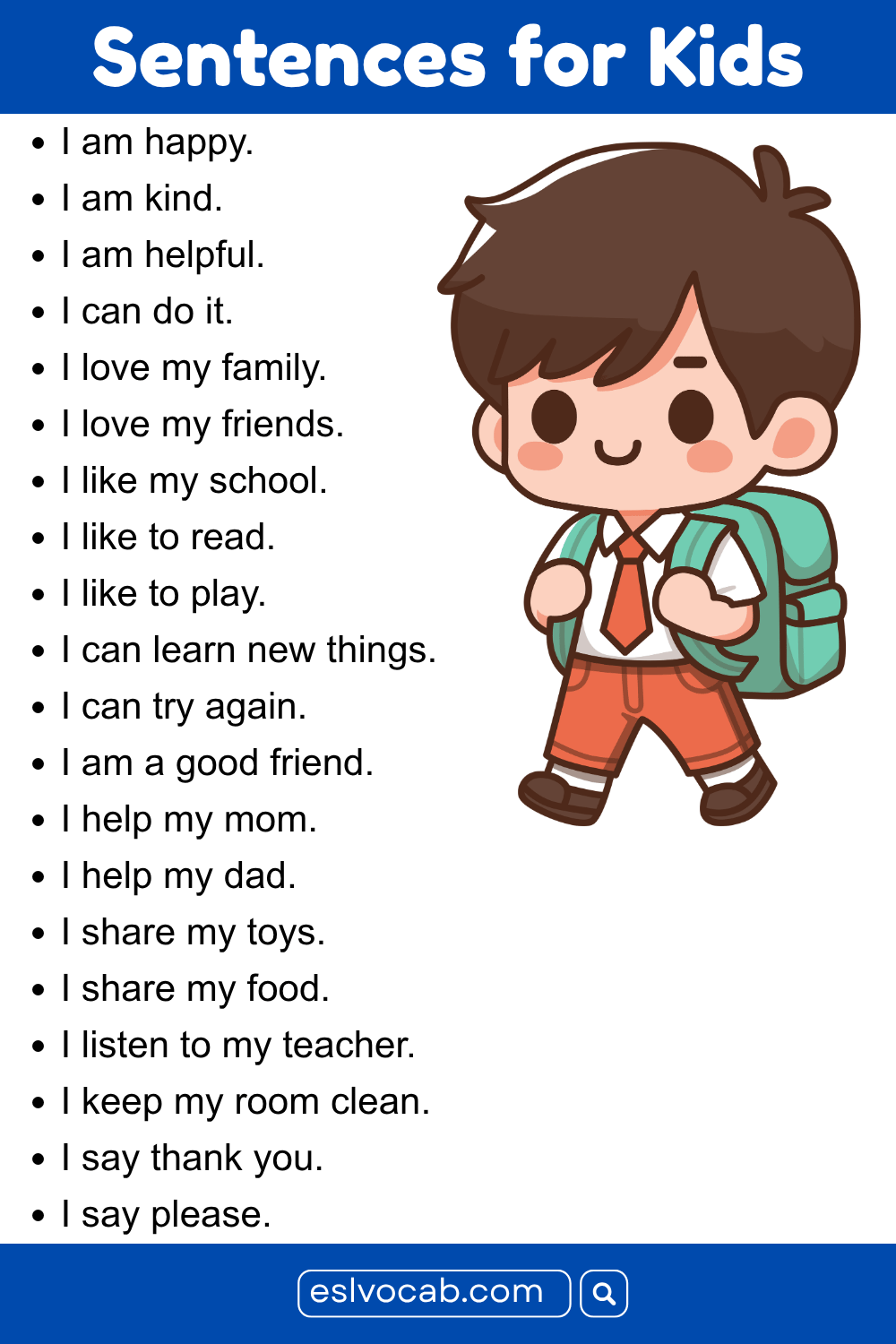
Positive sentences for kindergarten children teach simple ways to express happiness, kindness, confidence, appreciation, and encouragement. They can also help children practice friendly language in everyday situations.
- I am happy.
- I am kind.
- I am helpful.
- I can do it.
- I love my family.
- I love my friends.
- I like my school.
- I like to read.
- I like to play.
- I can learn new things.
- I can try again.
- I am a good friend.
- I help my mom.
- I help my dad.
- I share my toys.
- I share my food.
- I listen to my teacher.
- I keep my room clean.
- I say thank you.
- I say please.
- I smile every day.
- I am proud of my work.
- I like to help others.
- I can make a picture.
- I can write my name.
- I can read a book.
- I can count to ten.
- I am ready to learn.
- I enjoy my day.
- I have a big smile.
Negative English Sentences for Children
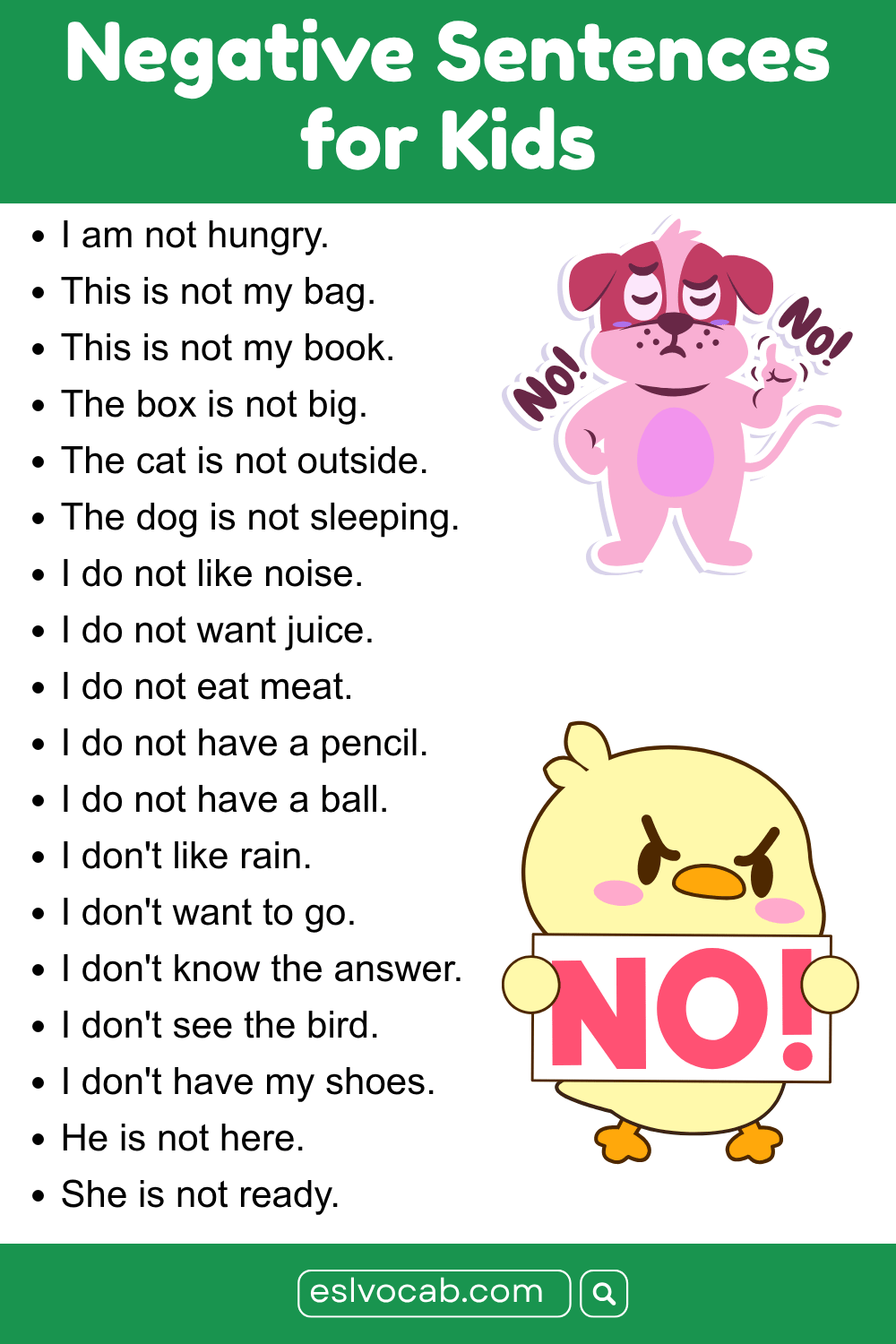
Negative English sentences help children learn how to say that something is not happening, something is not true, or they do not want something. Simple words such as “not,” “no,” and “don’t” are useful for everyday communication.
- I am not sad.
- I am not tired.
- I am not hungry.
- This is not my bag.
- This is not my book.
- The box is not big.
- The cat is not outside.
- The dog is not sleeping.
- I do not like noise.
- I do not want juice.
- I do not eat meat.
- I do not have a pencil.
- I do not have a ball.
- I don’t like rain.
- I don’t want to go.
- I don’t know the answer.
- I don’t see the bird.
- I don’t have my shoes.
- He is not here.
- She is not ready.
- It is not hot.
- It is not cold.
- The toy is not new.
- The door is not open.
- The cup is not full.
- My hands are not dirty.
- My shoes are not wet.
- We are not late.
- They are not at home.
- The baby is not crying.
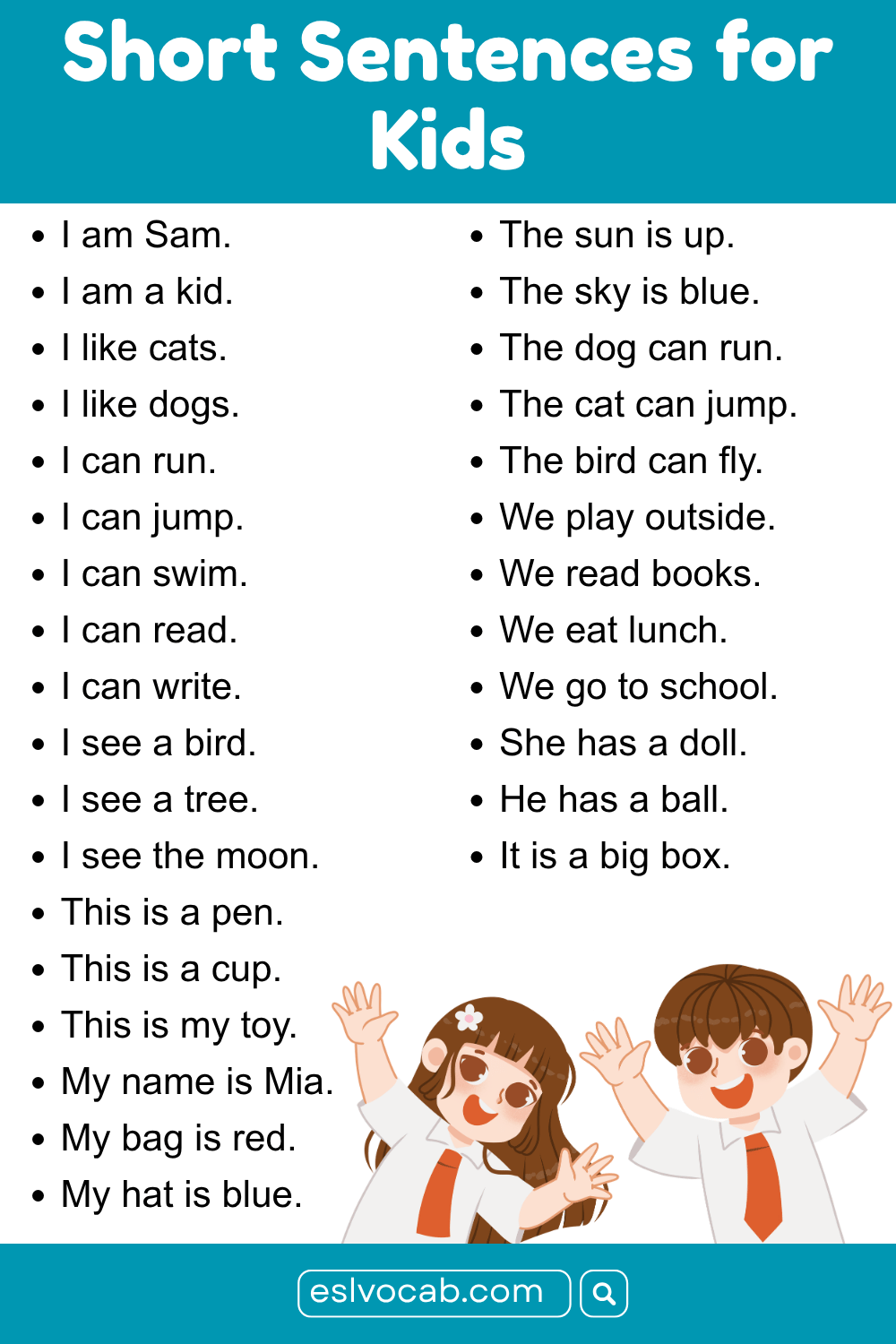
Short Sentences for Kindergarten to Read and Write
Short sentences give beginning readers an easy way to practice common words, spelling, sentence structure, and handwriting. These simple examples are suitable for reading aloud, copying, and basic writing practice.
- I am Sam.
- I am a kid.
- I like cats.
- I like dogs.
- I can run.
- I can jump.
- I can swim.
- I can read.
- I can write.
- I see a bird.
- I see a tree.
- I see the moon.
- This is a pen.
- This is a cup.
- This is my toy.
- My name is Mia.
- My bag is red.
- My hat is blue.
- The sun is up.
- The sky is blue.
- The dog can run.
- The cat can jump.
- The bird can fly.
- We play outside.
- We read books.
- We eat lunch.
- We go to school.
- She has a doll.
- He has a ball.
- It is a big box.
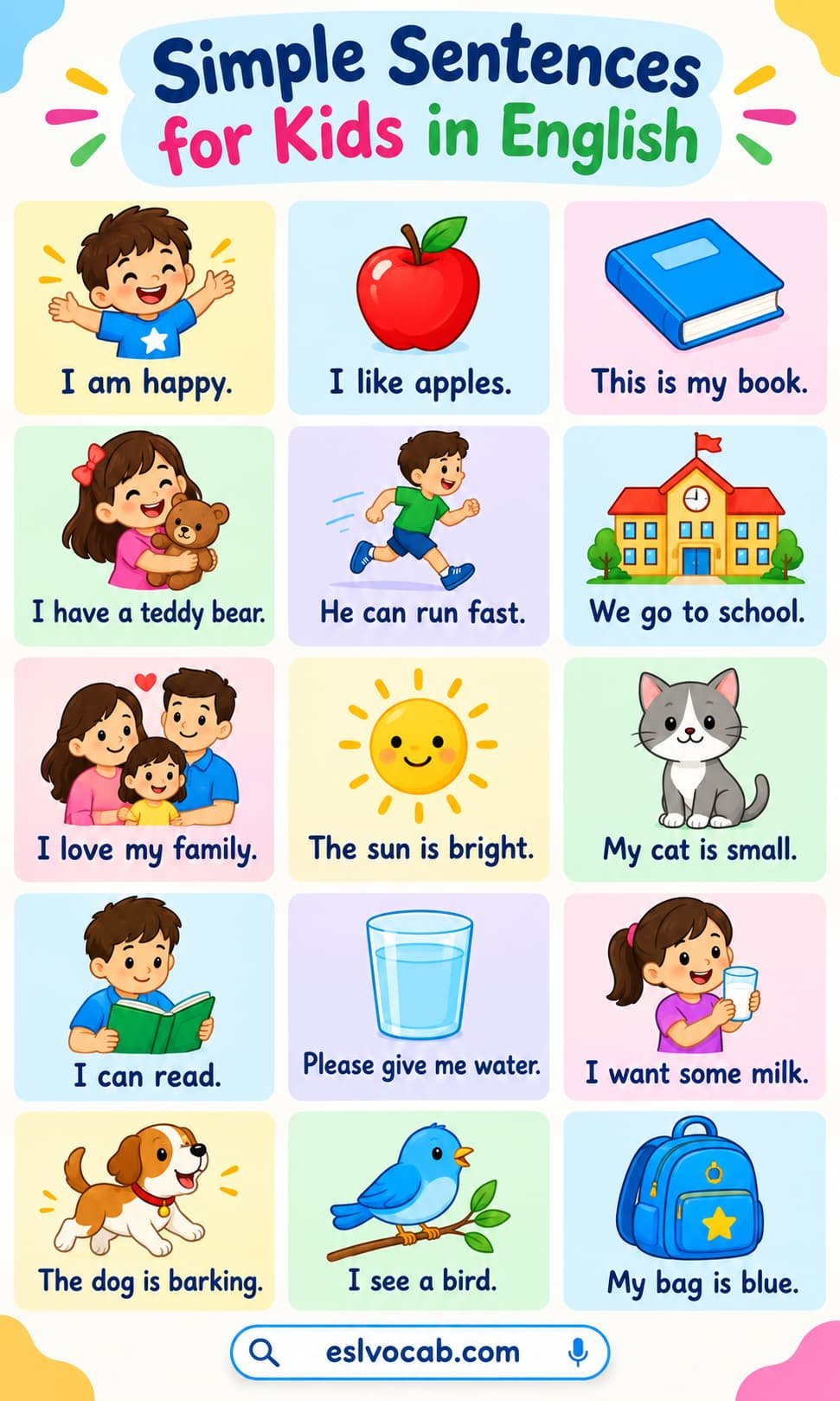
Simple Sentences for Kids in English
Simple English sentences help kids learn common words, understand basic sentence patterns, and speak clearly in everyday situations. Here are easy sentences children can read, understand, and practice.
- I am happy.
- I like apples.
- This is my book.
- I have a red ball.
- She is my friend.
- He can run fast.
- We go to school.
- I love my family.
- The sun is bright.
- My cat is small.
- I can read.
- Please give me water.
- I want some milk.
- This is my toy.
- The dog is barking.
- I see a bird.
- My bag is blue.
- It is raining.
- I like to play.
- We are good friends.
- Mom is cooking dinner.
- Dad is reading a book.
- The baby is sleeping.
- I wash my hands.
- I brush my teeth.
- Please open the door.
- Close the window, please.
- I am ready for school.
- Let’s play together.
- Have a nice day.
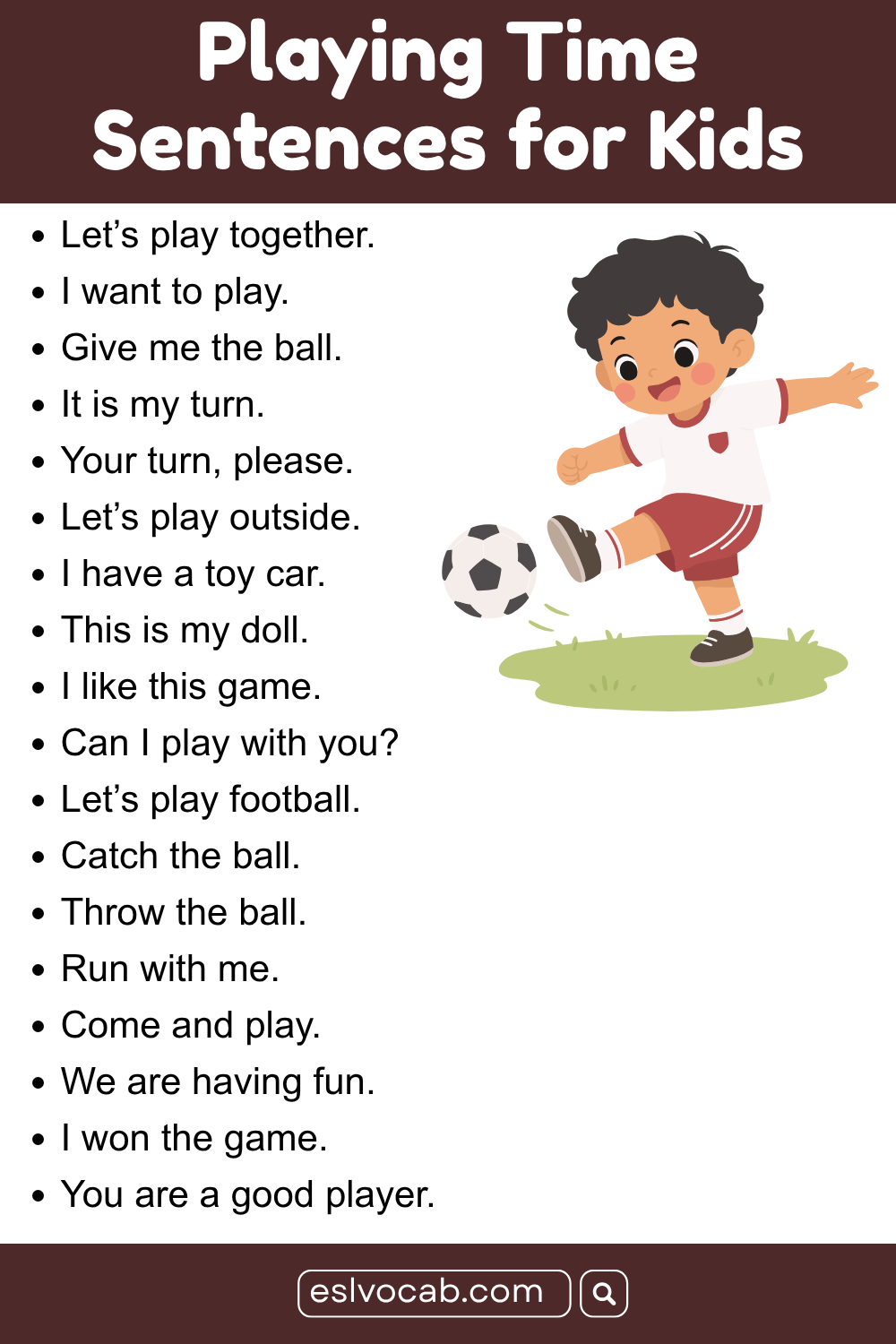
Playing Time English Sentences for Kids
Playing time is a fun way for kids to practice simple English sentences while talking about toys, games, friends, and activities.
- Let’s play together.
- I want to play.
- Give me the ball.
- It is my turn.
- Your turn, please.
- Let’s play outside.
- I have a toy car.
- This is my doll.
- I like this game.
- Can I play with you?
- Let’s play football.
- Catch the ball.
- Throw the ball.
- Run with me.
- Come and play.
- We are having fun.
- I won the game.
- You are a good player.
- Let’s play again.
- Time to go home.
FAQs About Kids Sentences
Easy sentences for kids are short English sentences using familiar words and simple grammar. They often describe people, objects, actions, feelings, family, school, and daily activities.
Kindergarten kids can learn English sentences by reading short examples, listening to adults, repeating phrases, using pictures, practicing handwriting, and connecting sentences with everyday activities.
Some simple kindergarten sentences include “I am happy,” “This is my book,” “I like apples,” “I can run,” and “My bag is blue.”
Short English sentences help children practice vocabulary, reading, writing, speaking, and basic sentence structure without making English lessons too difficult.
Parents can practice sentences during normal activities such as eating, playing, getting dressed, reading books, or preparing for school. Repeating a few sentences each day can build confidence.
Positive sentences for kids express happy, kind, helpful, or confident ideas. Examples include “I can do it,” “I am kind,” “I like to learn,” and “I help my friends.”
Negative sentences tell that something is not true, is not happening, or is not wanted. Examples include “I am not tired,” “This is not my bag,” and “I don’t like rain.”
Read more