
Learning to make short sentences helps children build strong reading and writing skills. Sentences for 1st Grader should use simple words, familiar ideas, and clear sentence patterns. Kids can start with words they hear every day and slowly make longer sentences. Examples include I like cats., The sun is hot., We go to school., and Dad is home. Reading these sentences aloud can also help children improve spelling, vocabulary, and confidence.
What Are Sentences for 1st Graders?
Sentences for first graders are short groups of words that express a complete thought. At this stage, children learn to start sentences with capital letters, leave spaces between words, and use a period at the end.
A good way to learn is to begin with familiar words about school, family, animals, food, and daily life. Children can read each sentence aloud, copy it, and then make a new sentence using the same pattern.
Here are some simple examples:
- I have a ball.
- The dog runs.
- Mom is happy.
- We like school.
Simple Sentences for 1st Grader for Kids
Simple sentences are a great starting point for young learners. They usually have a subject and an action or description that is easy to understand.
- I see a bird.
- The cat is small.
- I like my book.
- Sam has a toy.
- The sun is bright.
- We play outside.
- Dad has a car.
- The baby is cute.
- I can run fast.
- The dog can jump.
- Mom cooks food.
- I have a red pen.
- The boy is happy.
- She has a doll.
- He likes milk.
- We read a book.
- The bird can fly.
- My bag is blue.
- I see a big tree.
- The fish can swim.
Easy Sentences for First Graders Every Student Should Know
Easy sentences help children practice common words and basic sentence patterns. These examples are suitable for early reading and writing practice.
- I am a kid.
- I like to play.
- This is my home.
- I have two hands.
- The sky is blue.
- I can read.
- I can write.
- We go to school.
- My teacher is nice.
- I like my friends.
- The dog is brown.
- The cat can run.
- I eat an apple.
- Mom loves me.
- Dad helps me.
- The sun is up.
- I drink water.
- My book is new.
- We have fun.
- I am happy.
Short Sentences for 1st Grade with Pictures
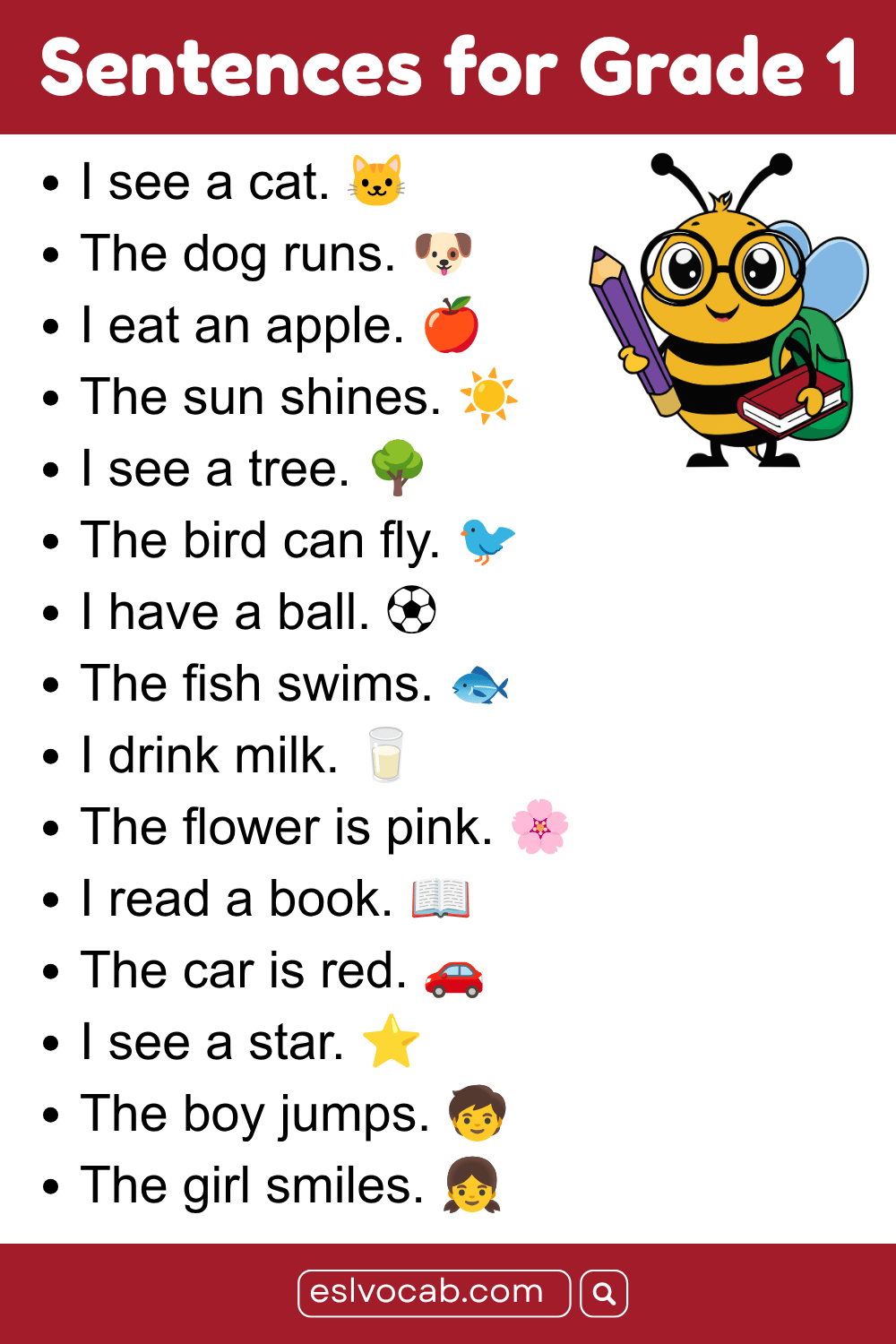
Short sentences work well with pictures because children can connect the words they read with something they can see. Teachers can place a simple picture beside each sentence.
- I see a cat. 🐱
- The dog runs. 🐶
- I eat an apple. 🍎
- The sun shines. ☀️
- I see a tree. 🌳
- The bird can fly. 🐦
- I have a ball. ⚽
- The fish swims. 🐟
- I drink milk. 🥛
- The flower is pink. 🌸
- I read a book. 📖
- The car is red. 🚗
- I see a star. ⭐
- The boy jumps. 🧒
- The girl smiles. 👧
- I wear a hat. 🧢
- The moon is bright. 🌙
- I have a kite. 🪁
- The frog can jump. 🐸
- I like ice cream. 🍦
100 Sentences for 1st Grader Easy to Read
The following sentences give children extra practice with basic vocabulary, sentence structure, and everyday topics.
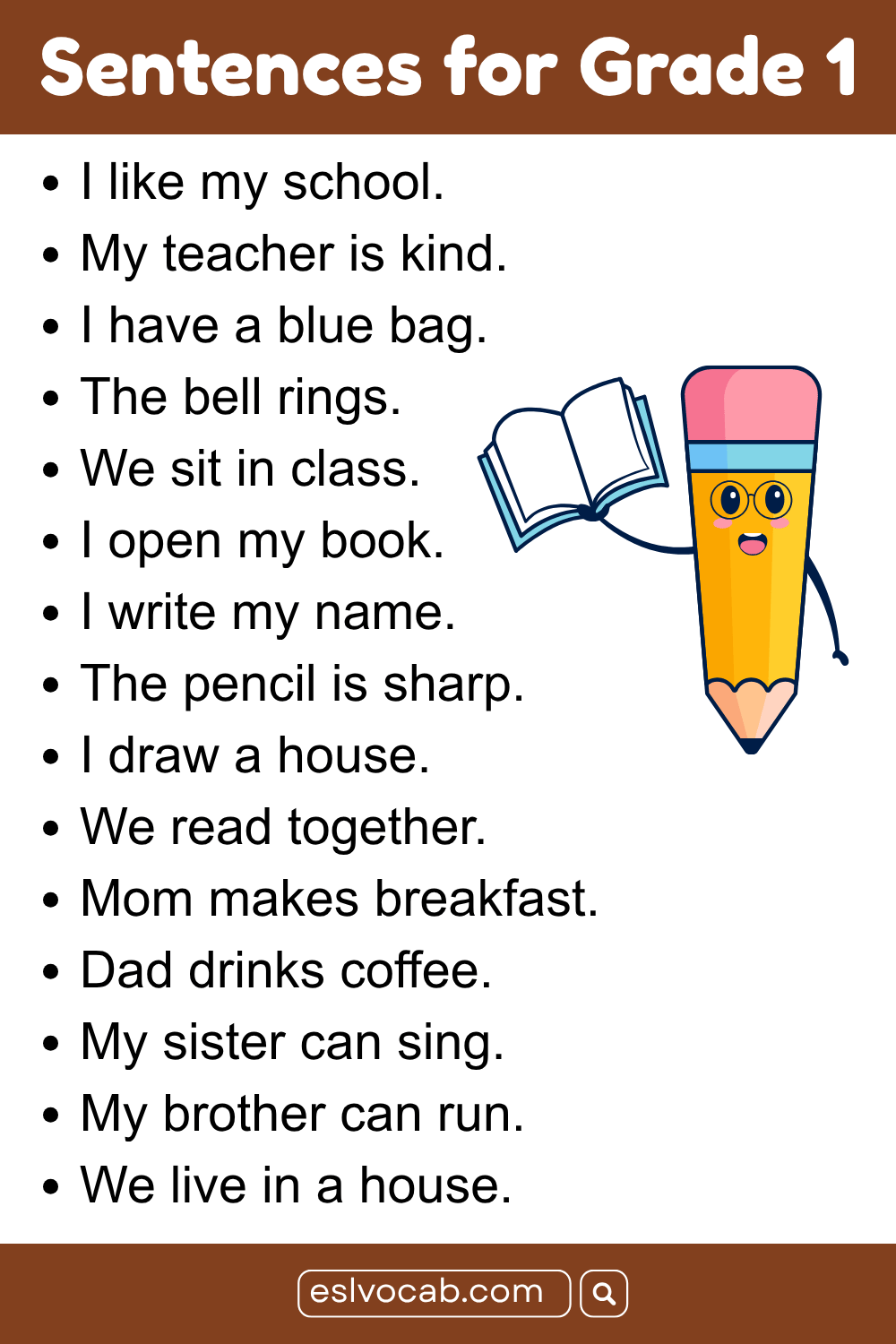
- I like my school.
- My teacher is kind.
- I have a blue bag.
- The bell rings.
- We sit in class.
- I open my book.
- I write my name.
- The pencil is sharp.
- I draw a house.
- We read together.
- Mom makes breakfast.
- Dad drinks coffee.
- My sister can sing.
- My brother can run.
- We live in a house.
- I love my family.
- Grandma tells stories.
- Grandpa has a hat.
- The baby is sleeping.
- We eat dinner together.
1st Grade Sentences with Sight Words
Sight words are common words that children should learn to recognize quickly. Practicing these words in short sentences makes early reading easier.
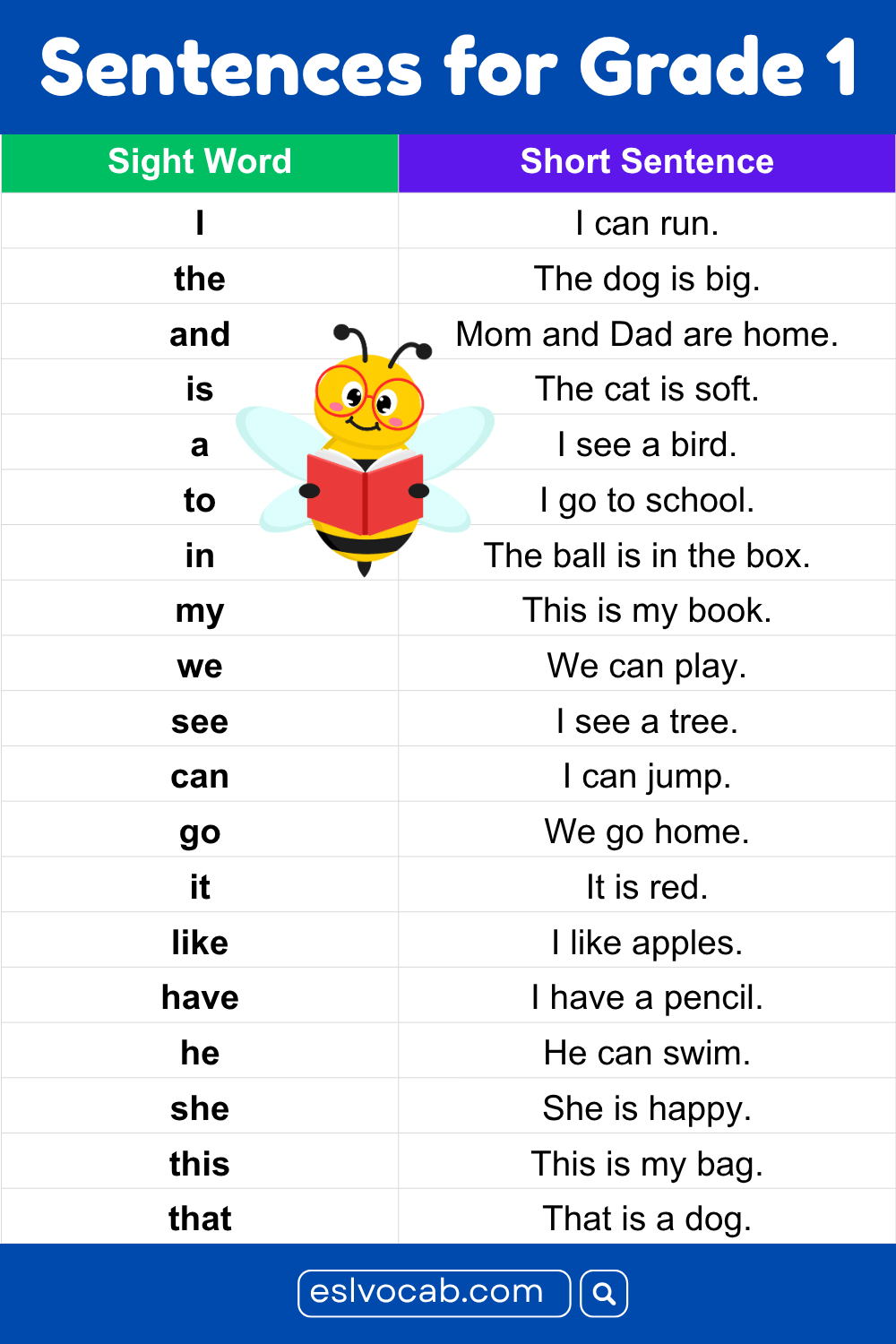
| Sight Word | Short Sentence |
|---|---|
| I | I can run. |
| the | The dog is big. |
| and | Mom and Dad are home. |
| is | The cat is soft. |
| a | I see a bird. |
| to | I go to school. |
| in | The ball is in the box. |
| my | This is my book. |
| we | We can play. |
| see | I see a tree. |
| can | I can jump. |
| go | We go home. |
| it | It is red. |
| like | I like apples. |
| have | I have a pencil. |
| he | He can swim. |
| she | She is happy. |
| this | This is my bag. |
| that | That is a dog. |
| we | We like school. |
Sentences for 1st Grader About School
School sentences help children practice words they hear during the school day.
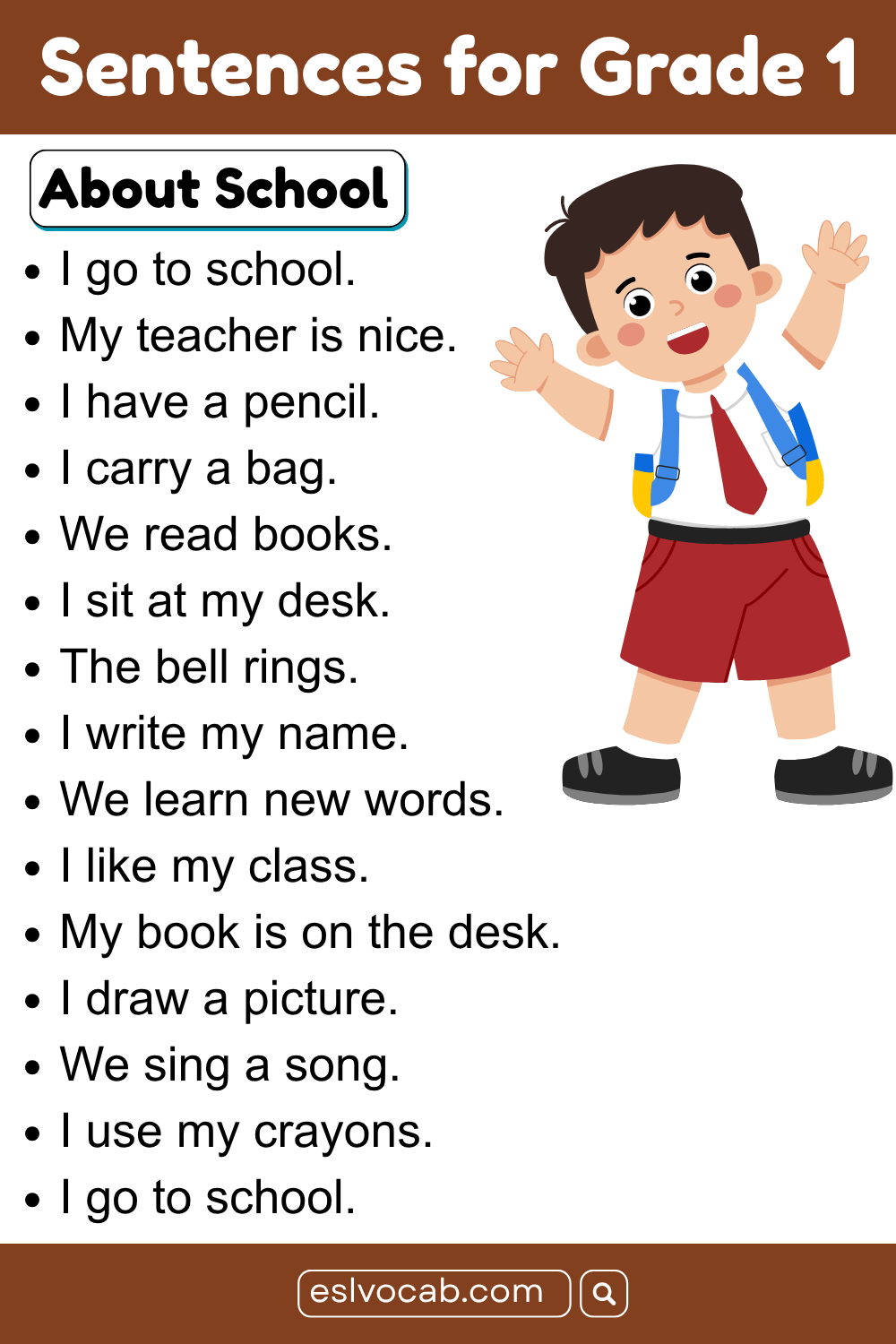
- I go to school.
- My teacher is nice.
- I have a pencil.
- I carry a bag.
- We read books.
- I sit at my desk.
- The bell rings.
- I write my name.
- We learn new words.
- I like my class.
- My book is on the desk.
- I draw a picture.
- We sing a song.
- I use my crayons.
- The teacher reads a book.
- I raise my hand.
- We play at recess.
- I clean my desk.
- I pack my bag.
- I love my school.
English Sentences About Family for Kids
Family sentences introduce children to words they use when talking about people at home.
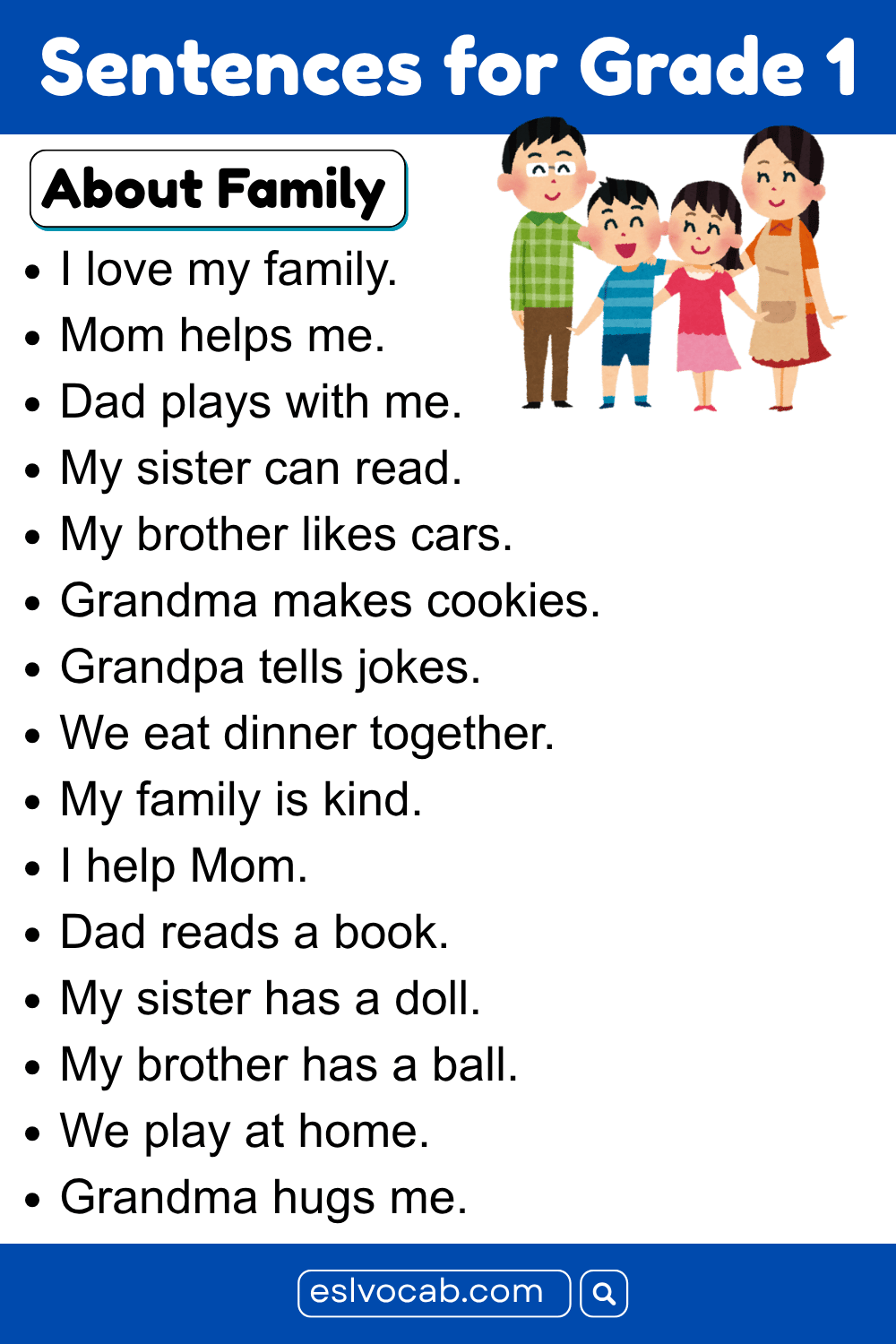
- I love my family.
- Mom helps me.
- Dad plays with me.
- My sister can read.
- My brother likes cars.
- Grandma makes cookies.
- Grandpa tells jokes.
- We eat dinner together.
- My family is kind.
- I help Mom.
- Dad reads a book.
- My sister has a doll.
- My brother has a ball.
- We play at home.
- Grandma hugs me.
- Grandpa walks with me.
- Mom gives me a kiss.
- Dad makes me laugh.
- We love our home.
- My family makes me happy.
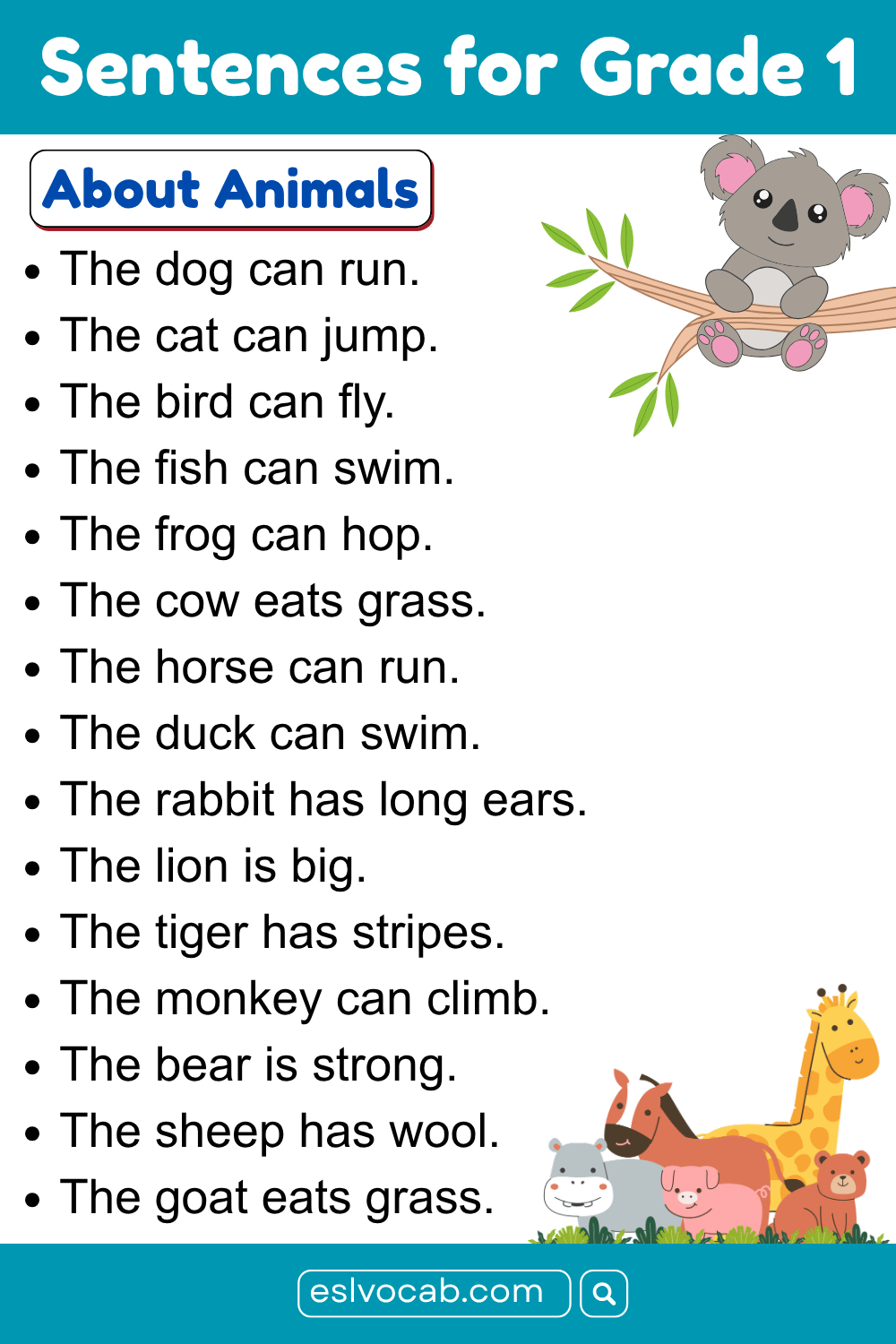
Sentences About Animals for Toddlers
Animal sentences make early reading practice more interesting while teaching children common animal words and actions.
- The dog can run.
- The cat can jump.
- The bird can fly.
- The fish can swim.
- The frog can hop.
- The cow eats grass.
- The horse can run.
- The duck can swim.
- The rabbit has long ears.
- The lion is big.
- The tiger has stripes.
- The monkey can climb.
- The bear is strong.
- The sheep has wool.
- The goat eats grass.
- The hen lays eggs.
- The mouse is small.
- The turtle walks slowly.
- The elephant has a trunk.
- I like animals.
Sentences for 1st Grader About Food
Food-related sentences use familiar words that children can easily recognize and understand.
- I like apples.
- I eat a banana.
- Mom makes soup.
- I drink milk.
- The bread is soft.
- I like rice.
- The cake is sweet.
- I eat an egg.
- I like cheese.
- Dad makes toast.
- I drink water.
- The apple is red.
- The banana is yellow.
- I like ice cream.
- We eat lunch.
- I have a sandwich.
- The soup is hot.
- I eat carrots.
- I like pizza.
- Dinner is ready.
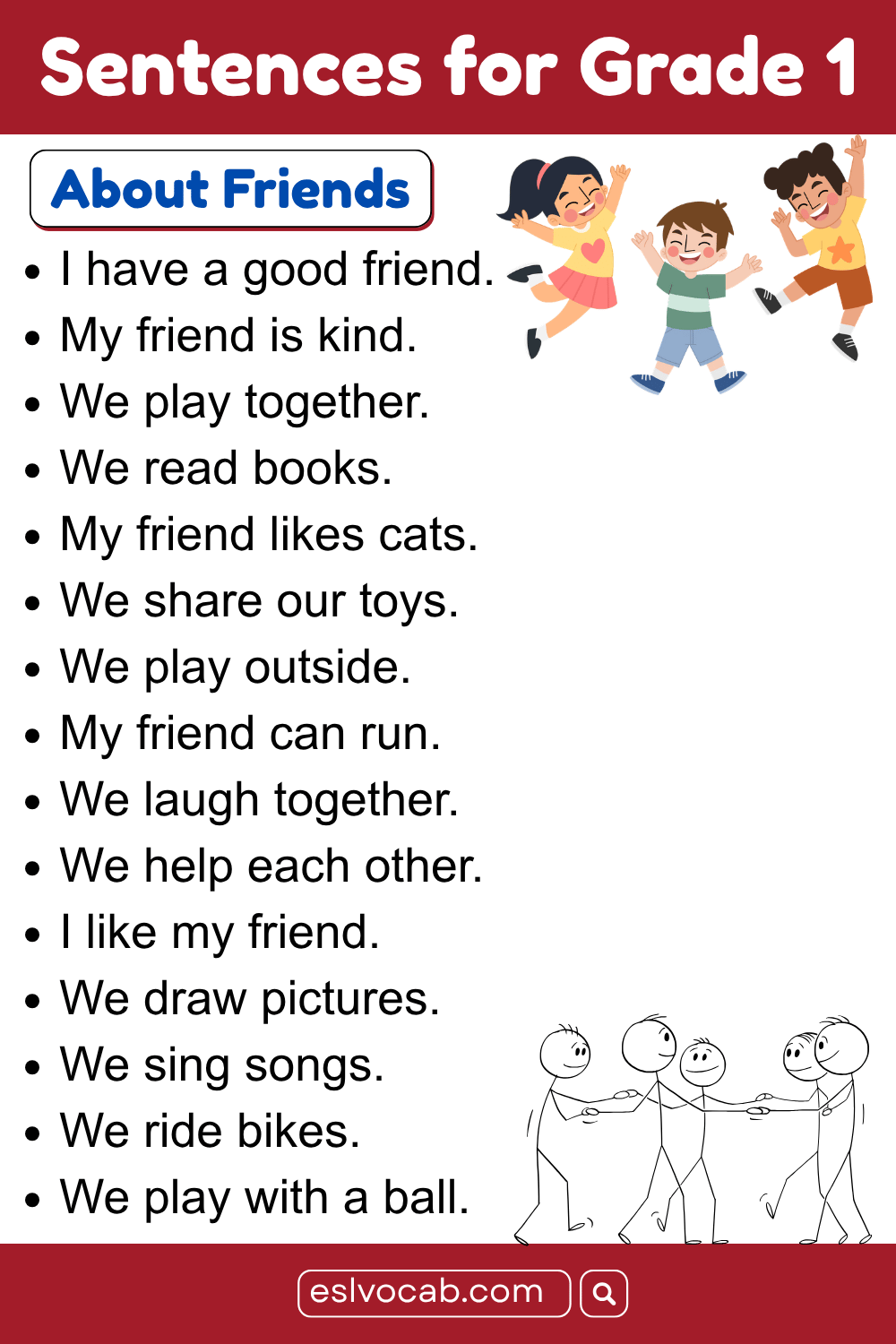
Sentences About Friends
Children can practice reading while learning simple words about friendship and playing together.
- I have a good friend.
- My friend is kind.
- We play together.
- We read books.
- My friend likes cats.
- We share our toys.
- We play outside.
- My friend can run.
- We laugh together.
- We help each other.
- I like my friend.
- We draw pictures.
- We sing songs.
- We ride bikes.
- We play with a ball.
- My friend has a red bag.
- We sit together.
- We talk at school.
- We have fun together.
- I am kind to my friends.
Sentences About Nature
Nature sentences help children read about things they see outside, such as trees, flowers, rain, and the sun.
- The sun is bright.
- The sky is blue.
- I see a tree.
- The grass is green.
- Flowers are pretty.
- Birds fly in the sky.
- The wind is cool.
- Rain falls from the sky.
- The moon is bright.
- Stars shine at night.
- I see a cloud.
- The tree has green leaves.
- The river has water.
- A bee sits on a flower.
- The garden is green.
- I like the fresh air.
- The sun feels warm.
- Leaves fall in autumn.
- Snow is white.
- I like nature.
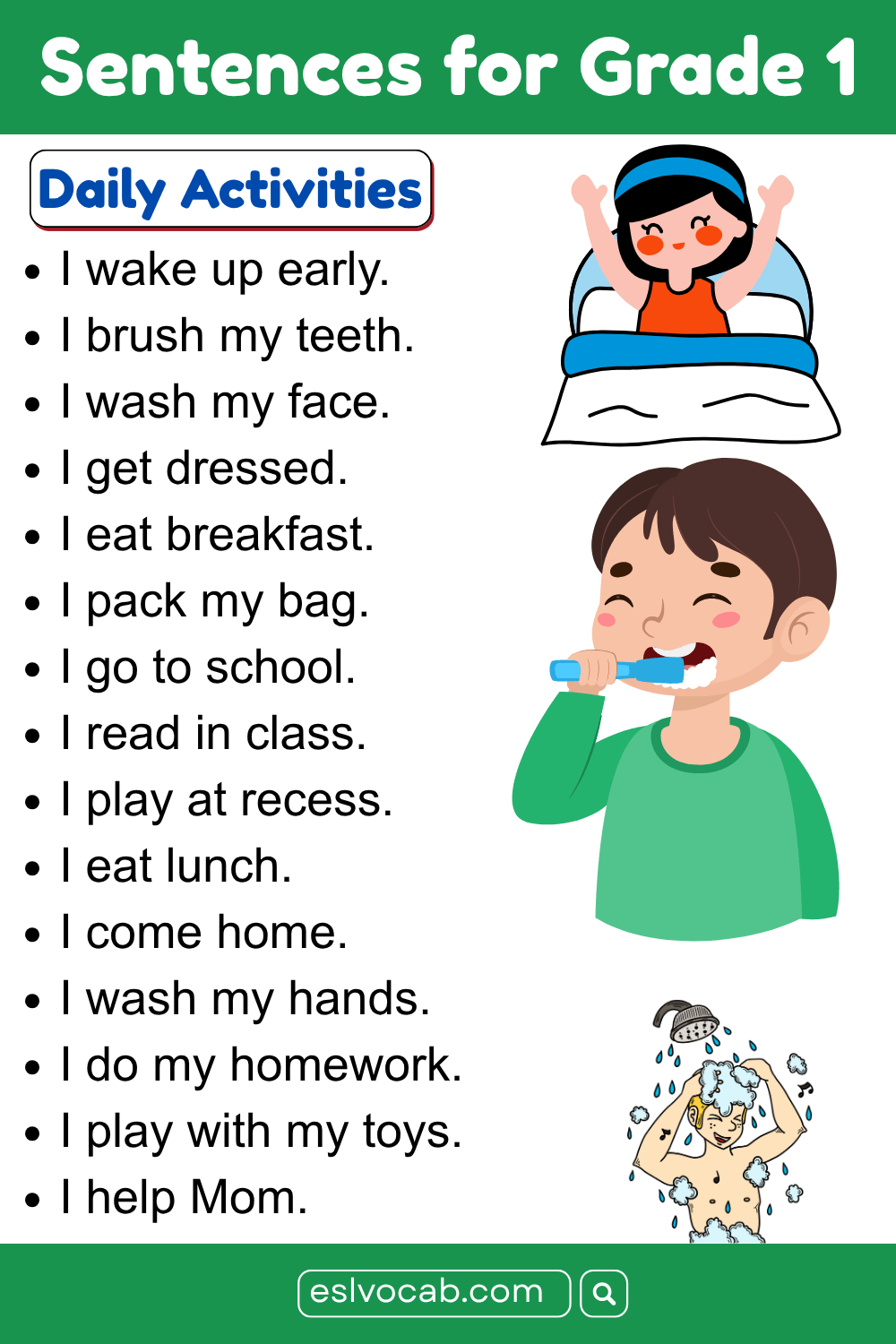
Daily Activities Sentences in English for Kids
- I wake up early.
- I brush my teeth.
- I wash my face.
- I get dressed.
- I eat breakfast.
- I pack my bag.
- I go to school.
- I read in class.
- I play at recess.
- I eat lunch.
- I come home.
- I wash my hands.
- I do my homework.
- I play with my toys.
- I help Mom.
- I eat dinner.
- I take a bath.
- I put on my pajamas.
- I read a book.
- I go to bed.
Fun Sentences for 1st Graders
Fun sentences can make reading practice feel more playful. Children can read them aloud and act out the actions.
- The frog can hop.
- My dog wears a hat.
- The cat likes milk.
- I can jump high.
- The duck can dance.
- My toy car is fast.
- The monkey eats a banana.
- I have a funny hat.
- The fish can swim fast.
- The puppy likes to play.
- My teddy bear is soft.
- The frog sits on a log.
- I can make a silly face.
- The bird sings a song.
- The rabbit can hop fast.
- My ball can bounce.
- The cow says moo.
- The duck says quack.
- I like funny stories.
- We laugh and play.
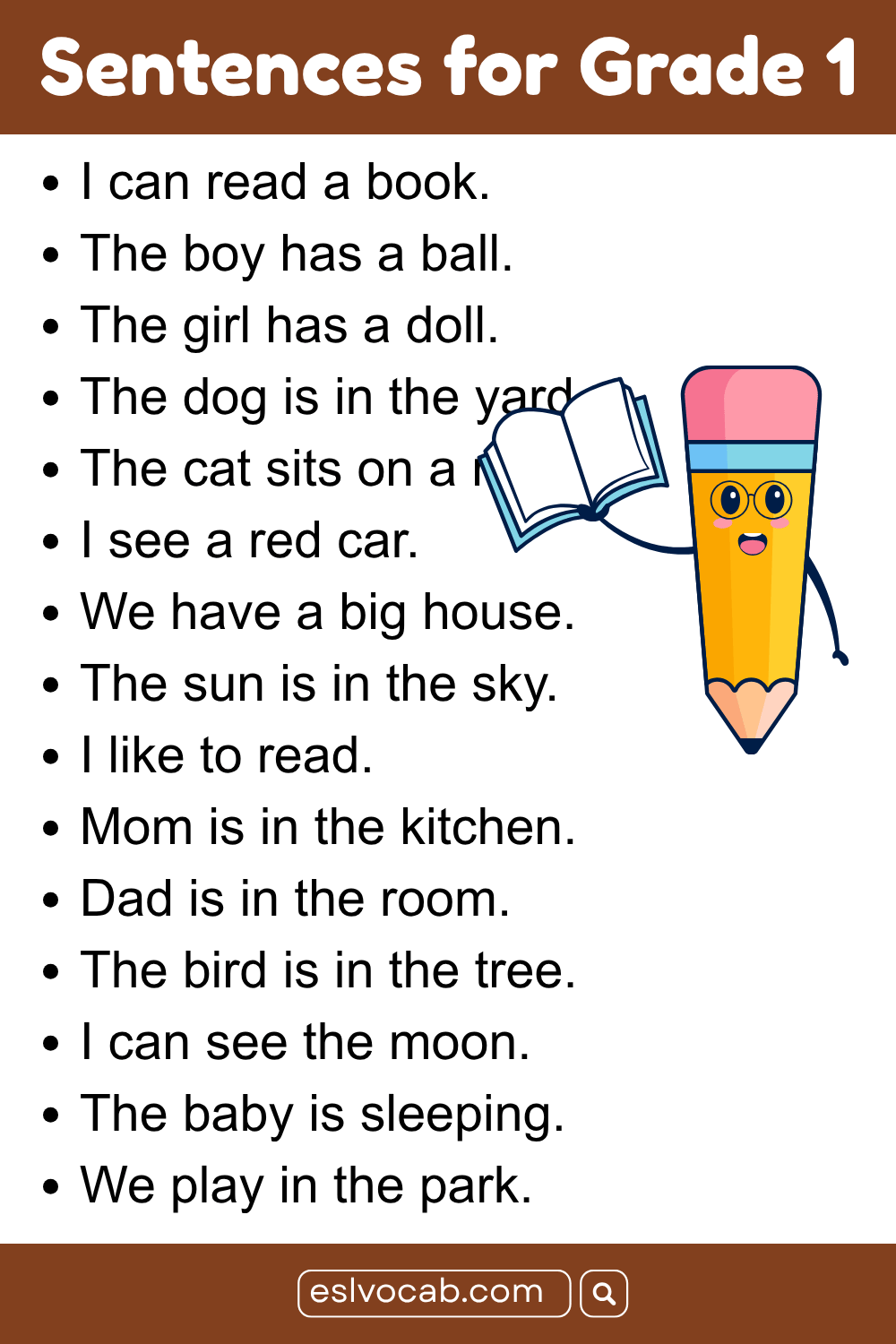
Reading Sentences for First Grade
Reading short sentences every day helps children become familiar with common words and basic sentence patterns. Start with a few sentences and slowly increase the amount of reading.
- I can read a book.
- The boy has a ball.
- The girl has a doll.
- The dog is in the yard.
- The cat sits on a mat.
- I see a red car.
- We have a big house.
- The sun is in the sky.
- I like to read.
- Mom is in the kitchen.
- Dad is in the room.
- The bird is in the tree.
- I can see the moon.
- The baby is sleeping.
- We play in the park.
- My friend has a kite.
- The flowers are pretty.
- I drink a glass of water.
- My book is on the table.
- I am ready to learn.
Grade 1 Sentences PDF
FAQs About Sentences for 1st Graders
Simple sentences for first graders use familiar words and basic sentence patterns. Examples include “I can run” and “The dog is big.”
Start with short sentences using familiar words. Ask your child to read, copy, and create new sentences about school, family, animals, or daily activities.
A first-grade sentence can be very short, often three to eight words. Children can gradually write longer sentences as their vocabulary and writing skills improve.
Useful sentence starters include “I can,” “I like,” “I see,” “This is,” “My,” “The,” “We can,” and “I have.”
Children can read short sentences aloud, point to each word, copy sentences, and match sentences with pictures. Repetition helps build reading confidence.
Common first-grade sight words include I, the, a, and, is, in, to, my, we, can, see, like, have, he, she, this, and that.
Short sentences make reading and writing less difficult for young learners. They help children practice word recognition, spelling, grammar, and basic sentence structure.
Pictures give children a visual clue about what a sentence means. Matching simple sentences with pictures can make vocabulary and reading practice easier to understand.
Read more